Designing a connected assessment system for educators and school leaders.
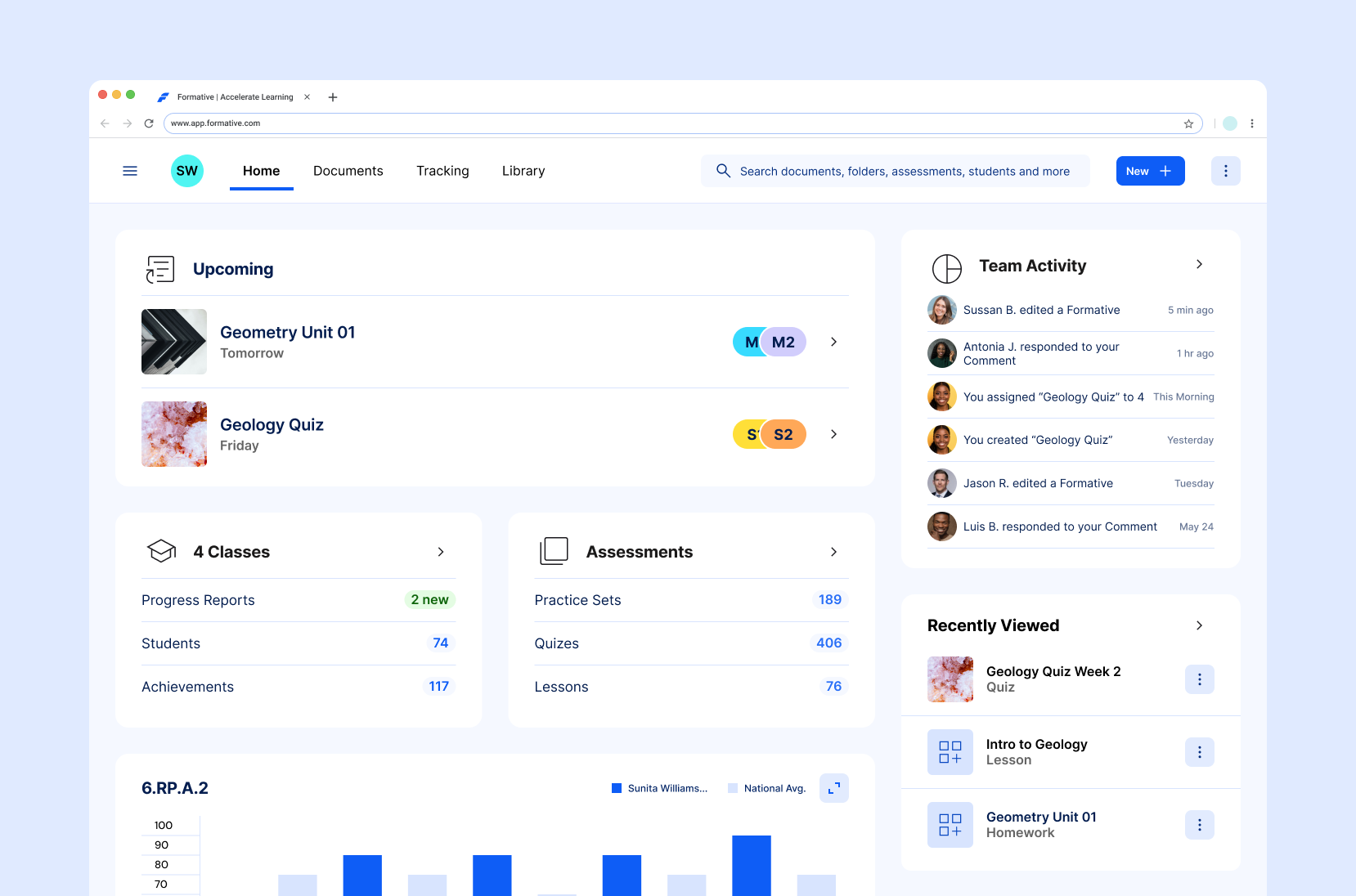
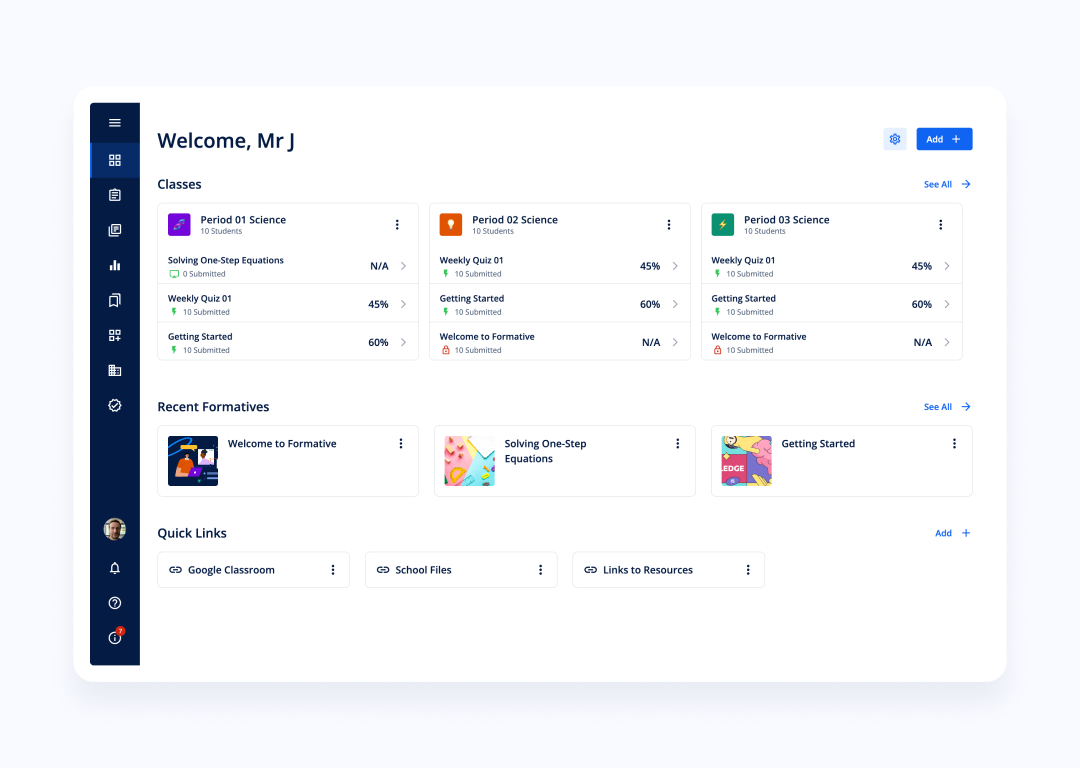
Formative helps educators create standards-aligned assessments, understand student responses in real time, provide feedback, and measure learning over time.
As Product Design Director, I helped mature the product and build the design organization needed to support its growth. I remained hands-on across onboarding, assessment creation, classroom workflows, reporting, product-led growth, design systems, and the company’s first ChatGPT-powered experiences.
The work spans several stages of Formative’s evolution, from early growth experiments and legacy workflows to redesigned product systems and AI-assisted experiences.
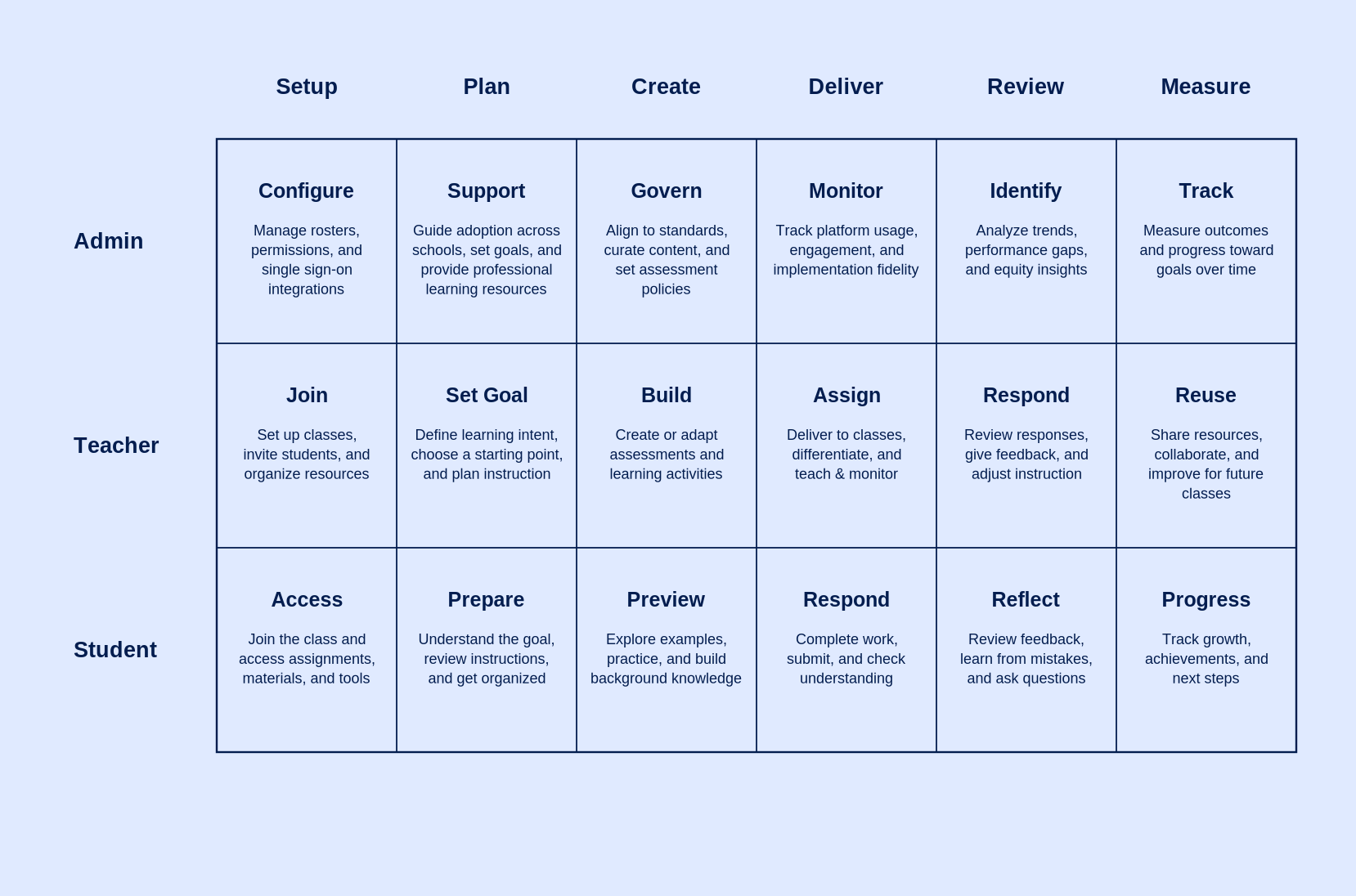
The platform connected administrators, teachers, and students through classes, assessments, educational standards, responses, and reporting. Everyday classroom activity could inform immediate instruction while contributing to a broader view of student and school progress.
- Weekly active users grew from approximately 260,000 to nearly 400,000
- Relevant example content made new teachers 3× more likely to assign an assessment
- Net Promoter Score reached 75+
- The design organization grew from one designer to six
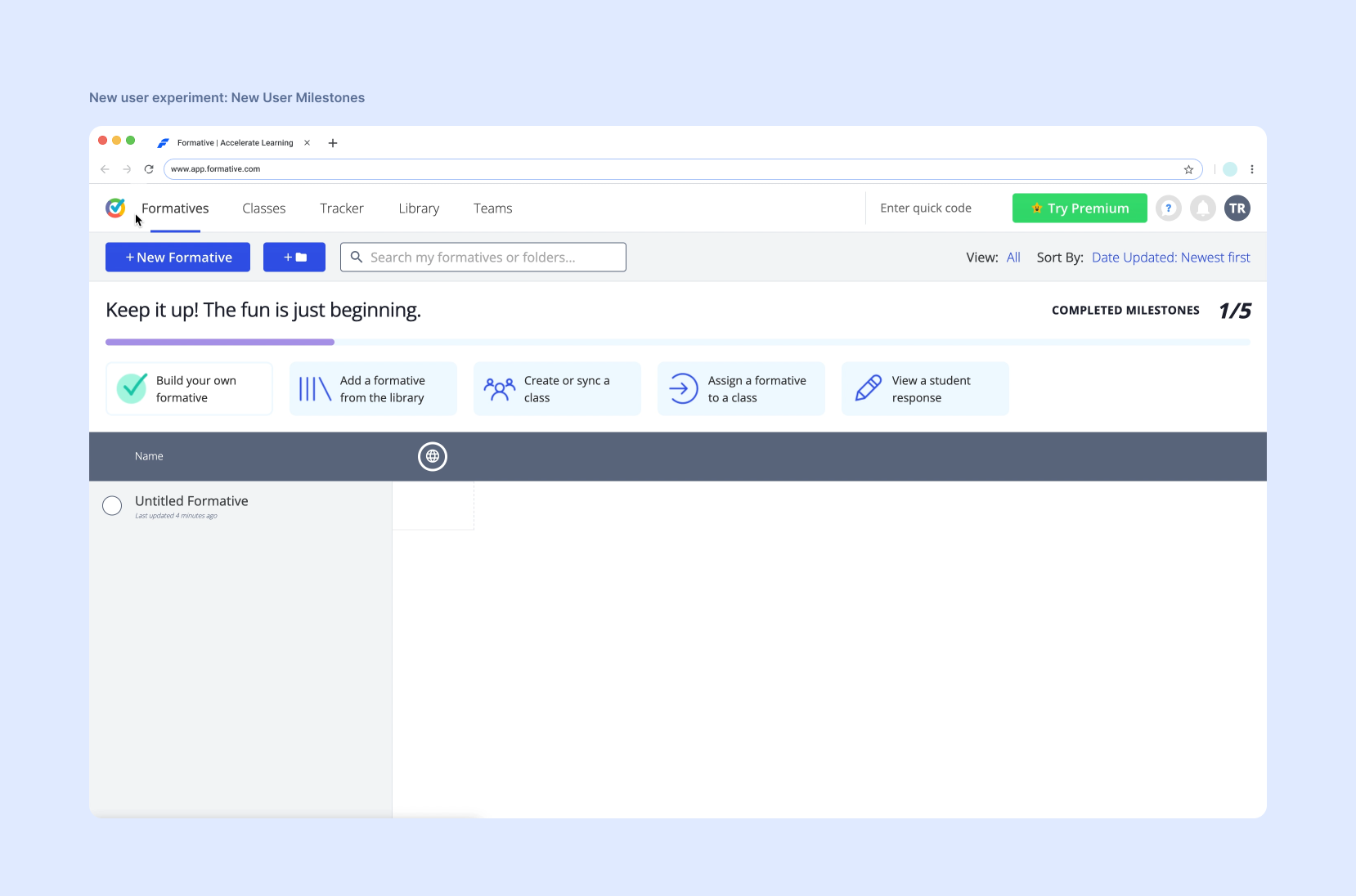
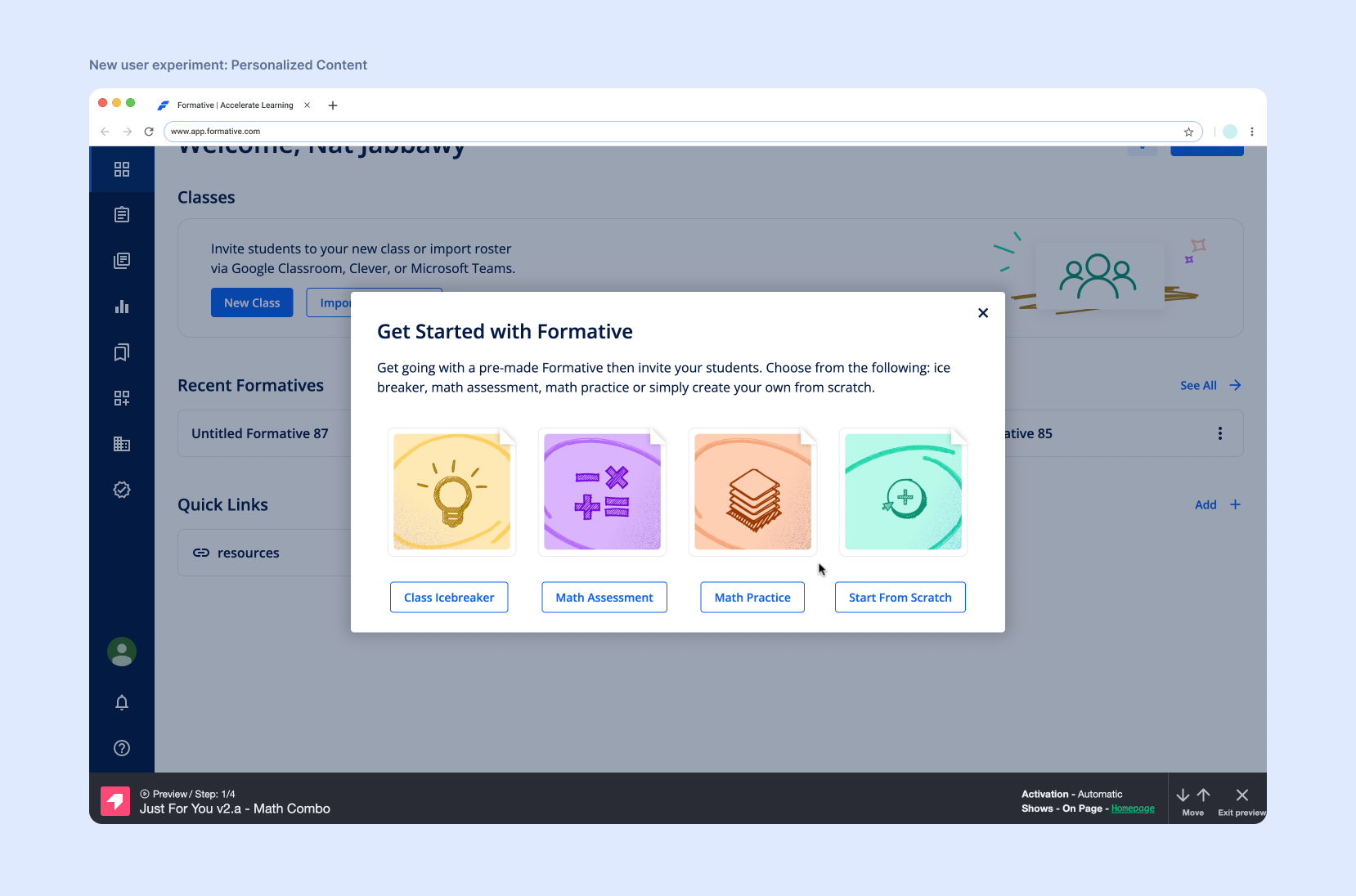
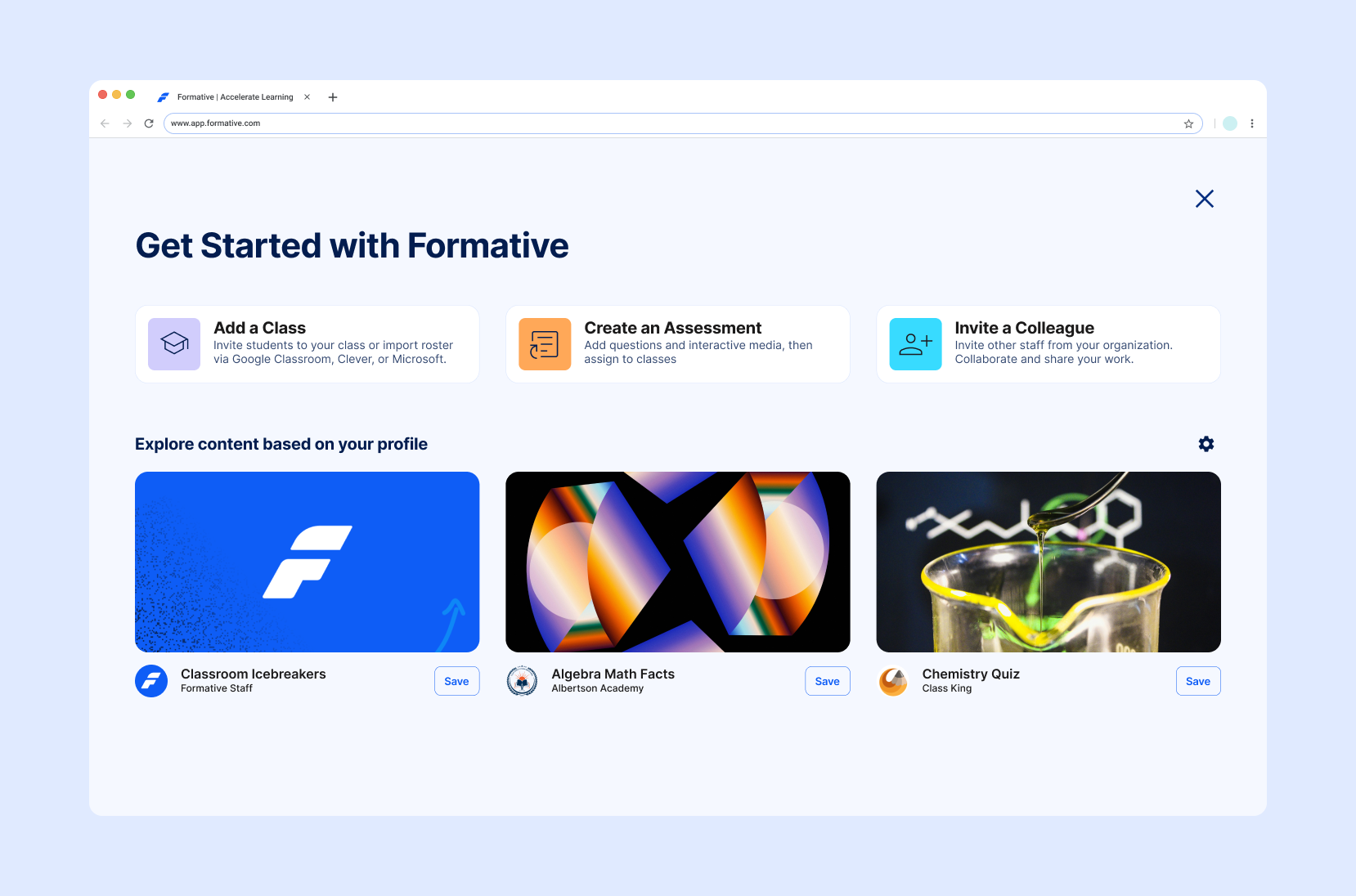
Formative supported many subjects, teaching styles, question types, and classroom environments. New teachers often arrived with a clear classroom goal but faced a blank starting point inside a flexible, complex platform.
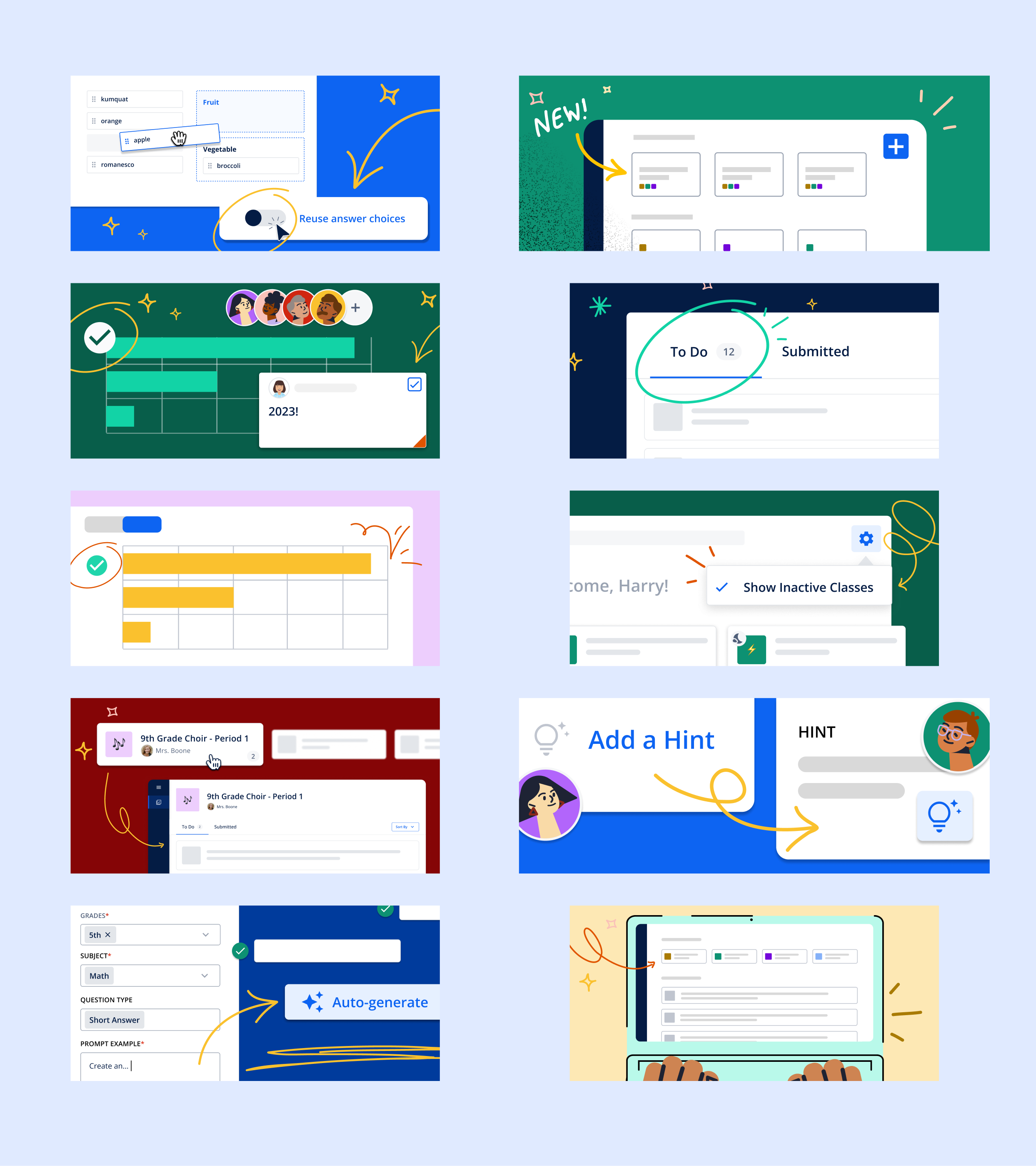
An initial milestone checklist clarified the path from creation to a student response and produced a slight lift. A second experiment provided classroom-ready examples. Teachers shown relevant premade content were three times more likely to assign an assessment.
That learning shaped goal-based onboarding, personalized recommendations, and a stronger connection between content discovery and assessment creation.
We also tested upgrade paths for free and individual users around advanced assessment capabilities, student invitations, AI features, teammate collaboration, and shared organizational workflows. These prompts appeared within relevant product moments so conversion stayed connected to the value teachers were already experiencing.
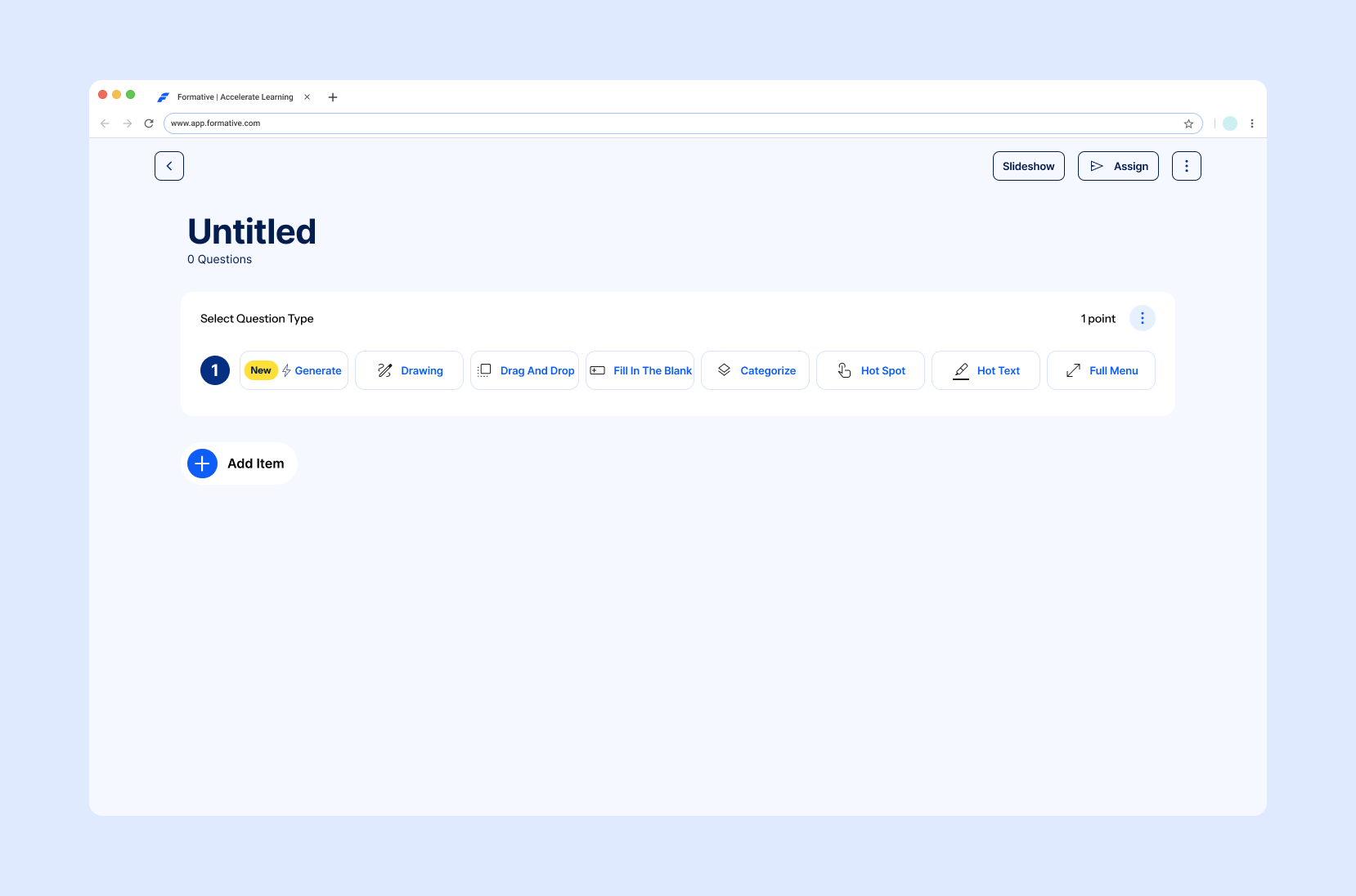
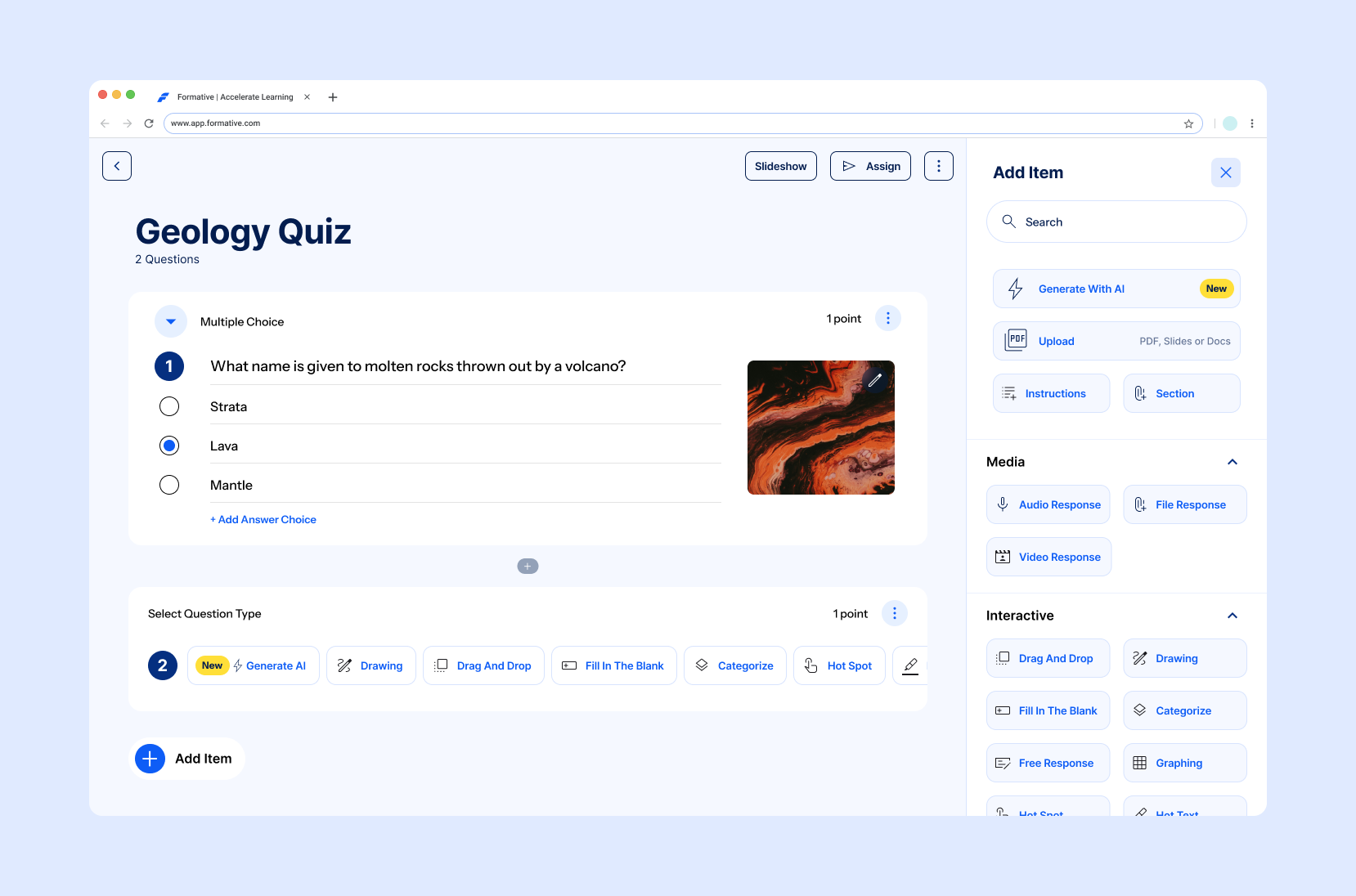
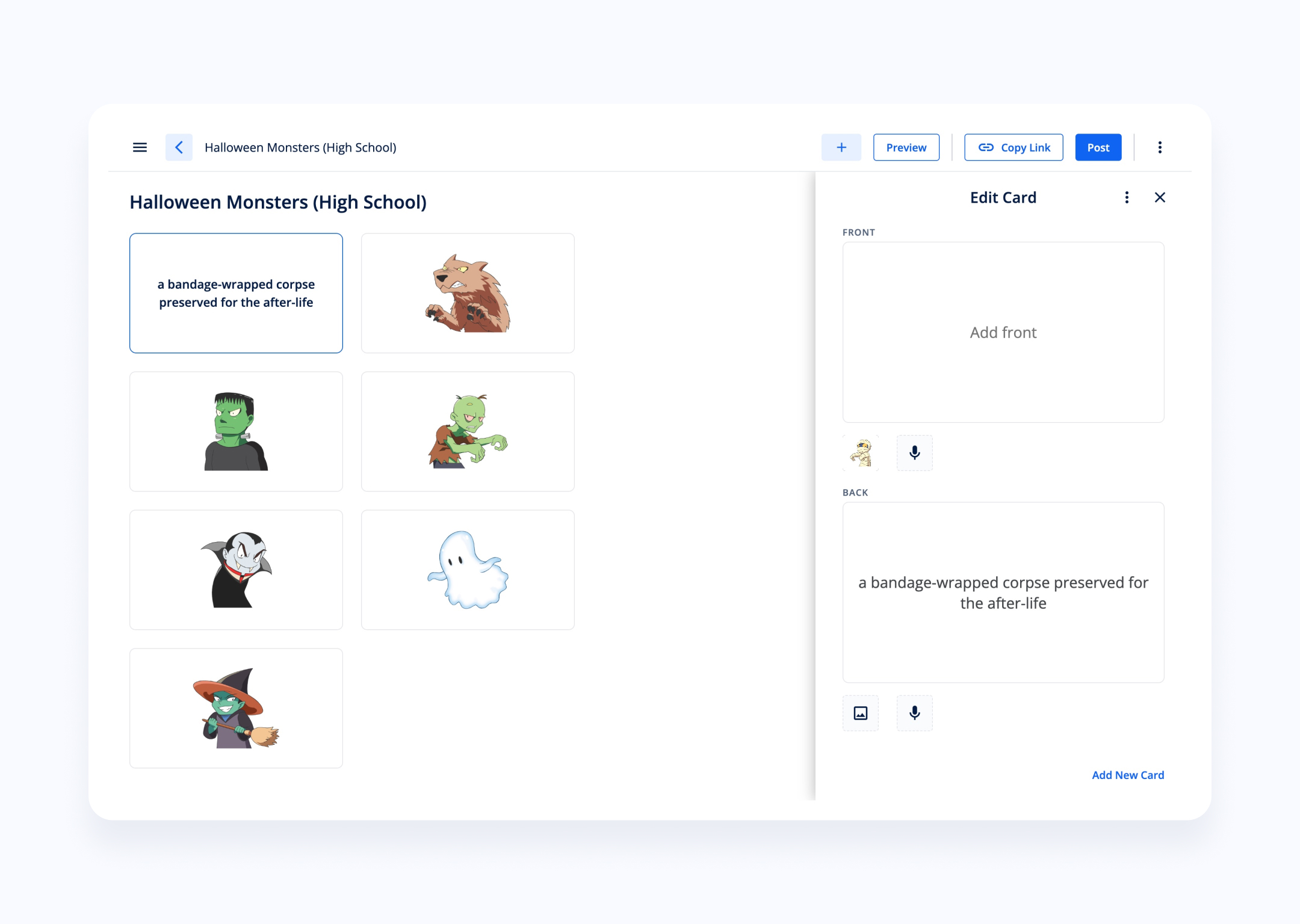
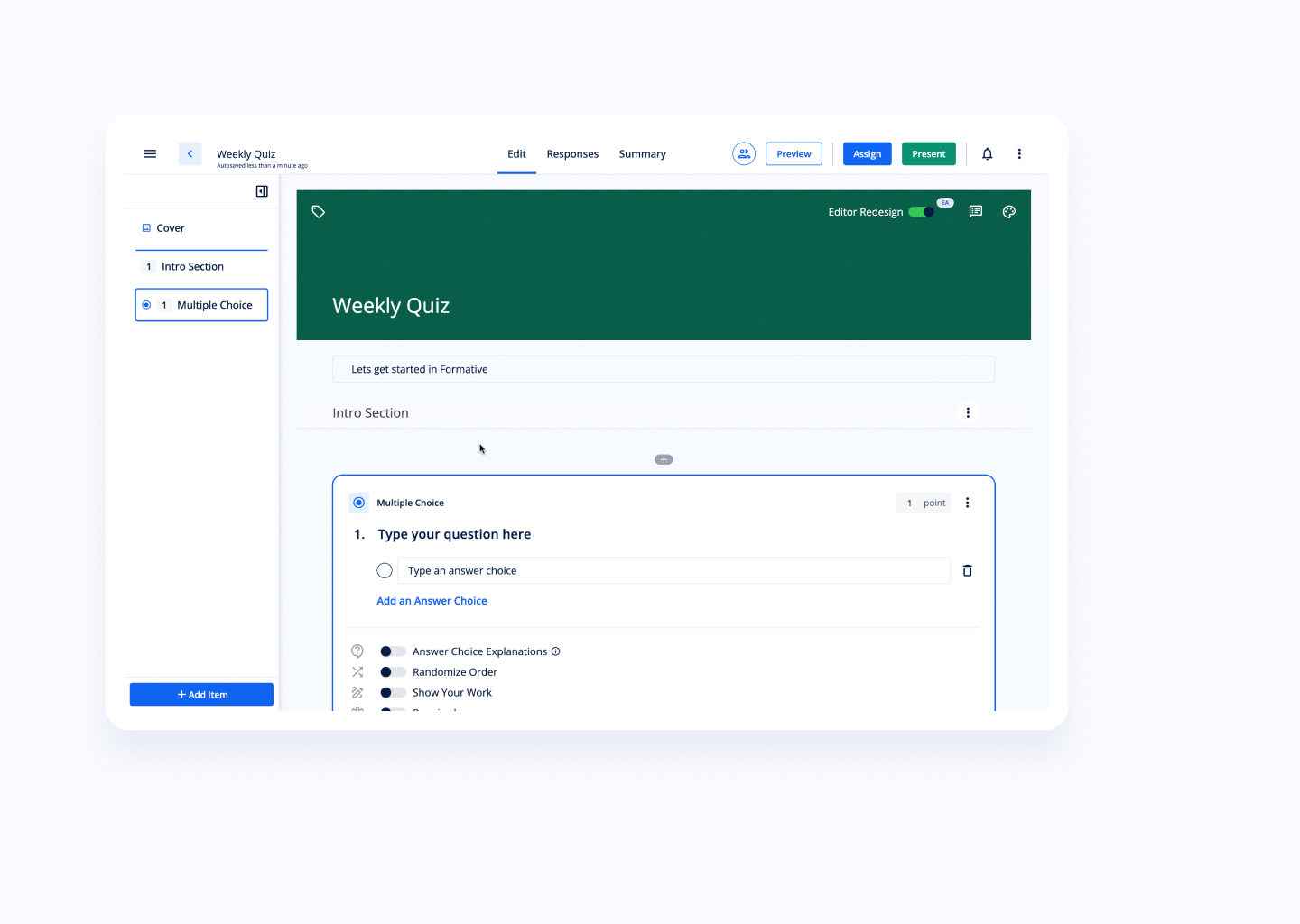
The assessment designer supported a broad set of question types, media, imports, content libraries, and instructional tools. The earlier experience relied on a largely empty canvas and a large menu that required teachers to understand the toolset before they could work efficiently.
We explored new approaches through user testing and A/B experimentation. The findings shaped a more contextual authoring experience that kept teachers oriented while making advanced capabilities easier to discover.
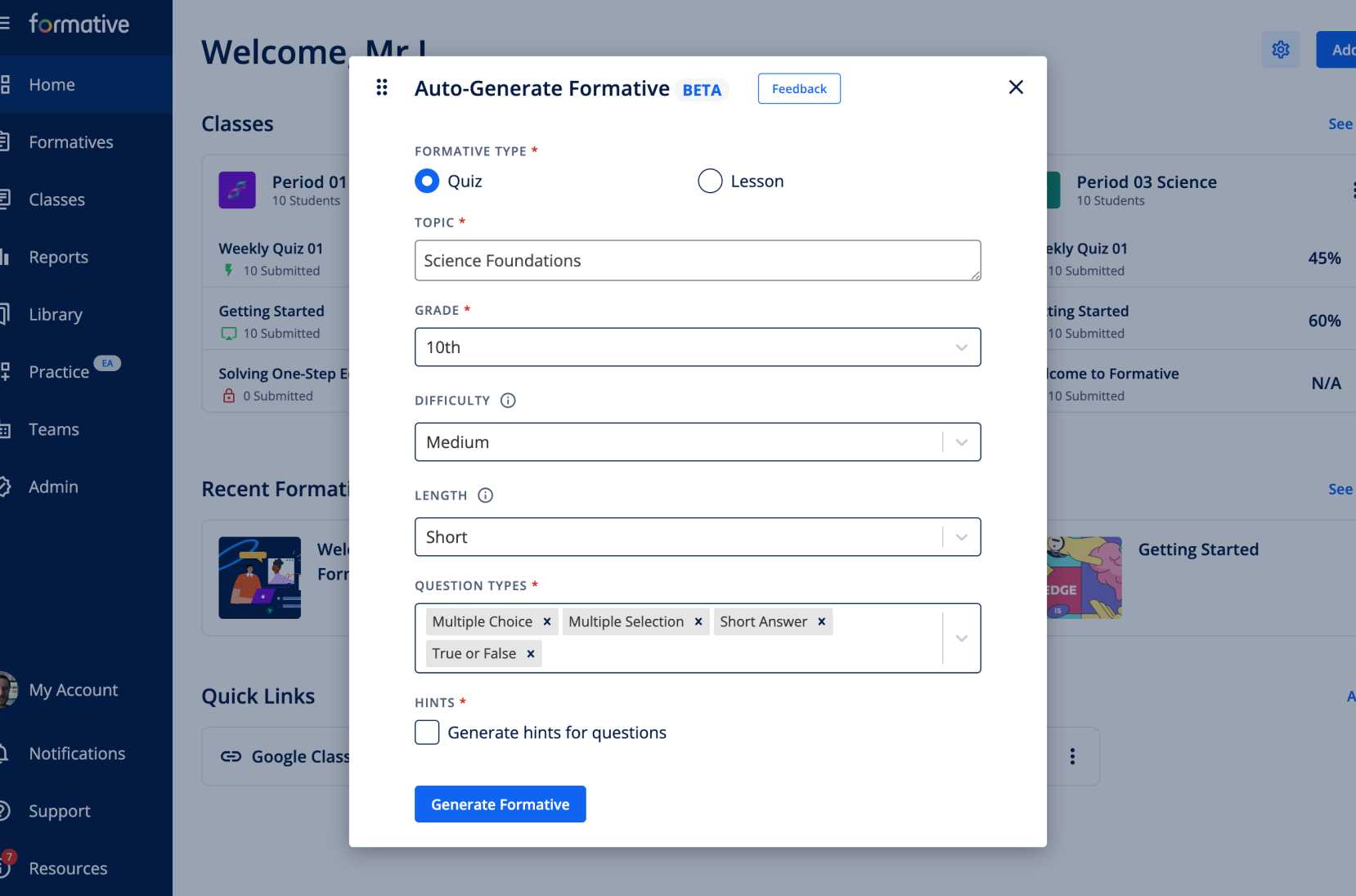
I helped lead Formative’s first ChatGPT API integration. AI-assisted generation appeared inside existing creation flows, giving teachers a useful starting point while preserving their responsibility to review, adapt, and assign the content. This work helped establish the foundation for the capabilities later developed under the Luna name.
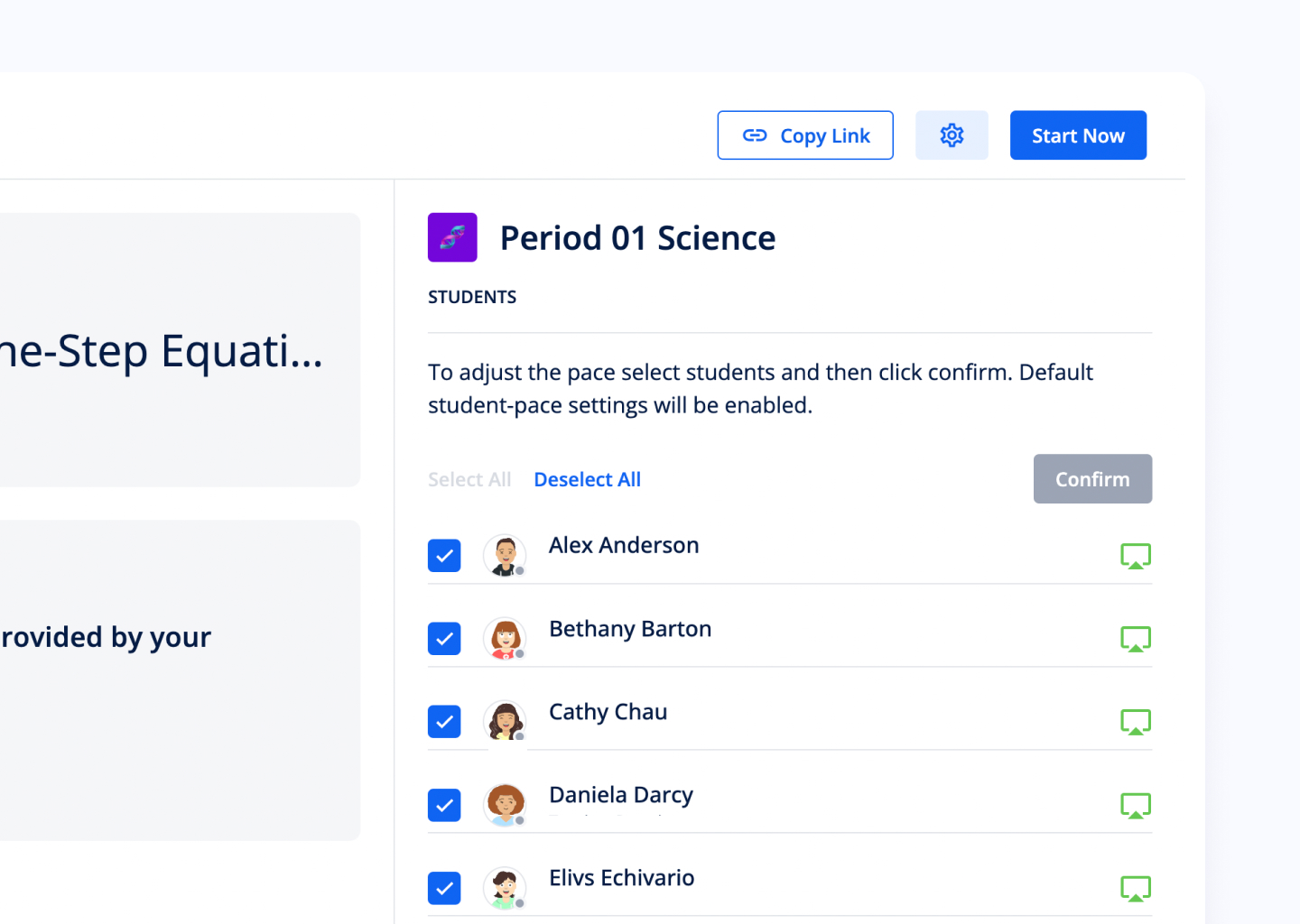
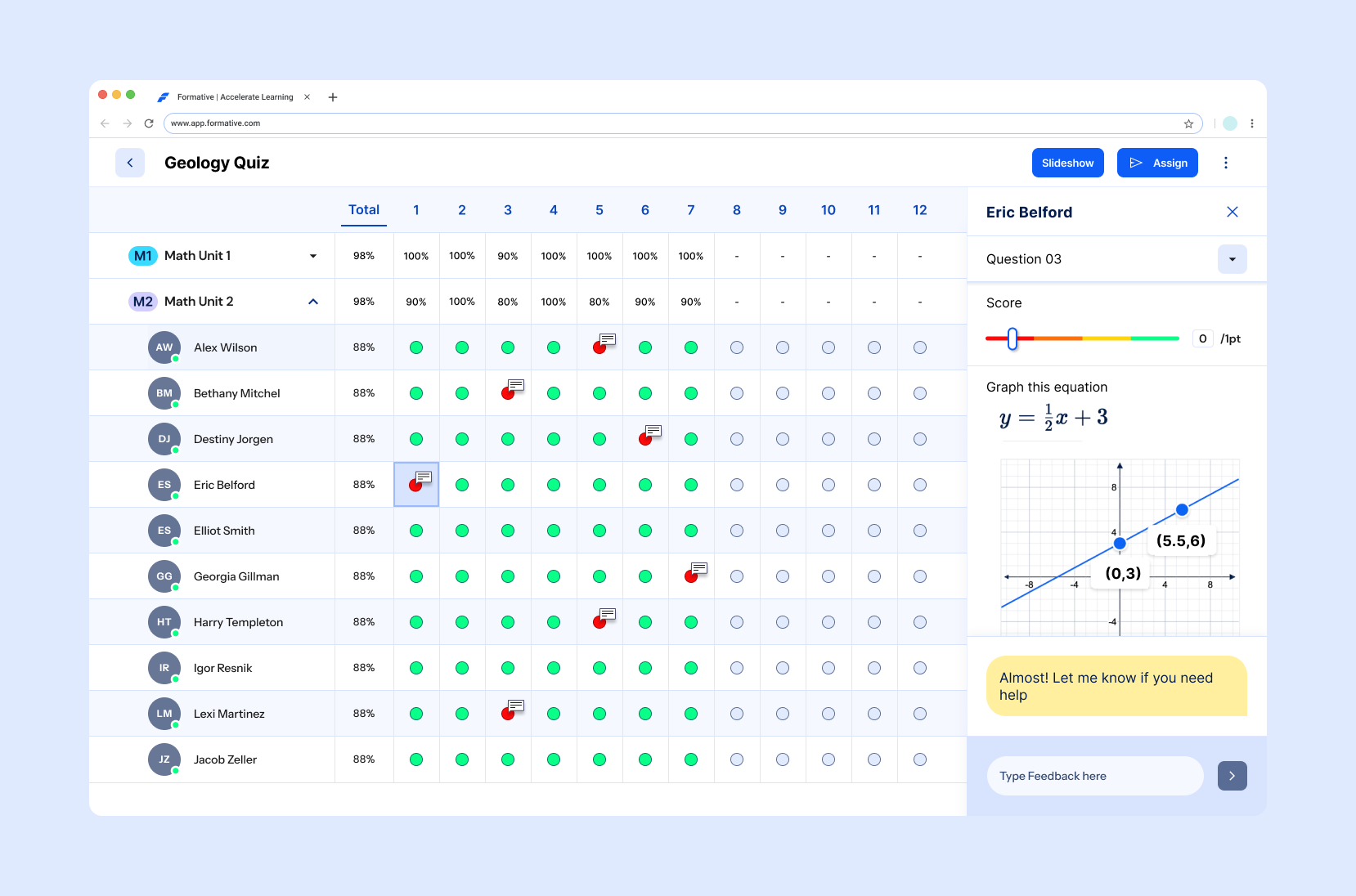
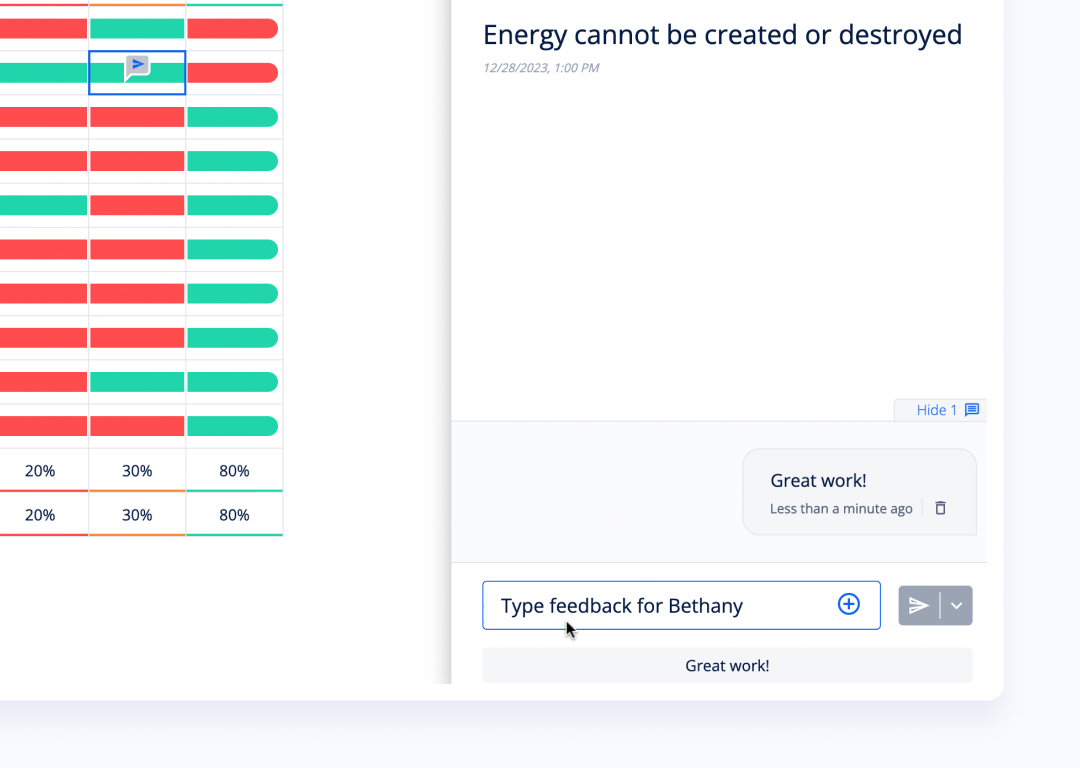
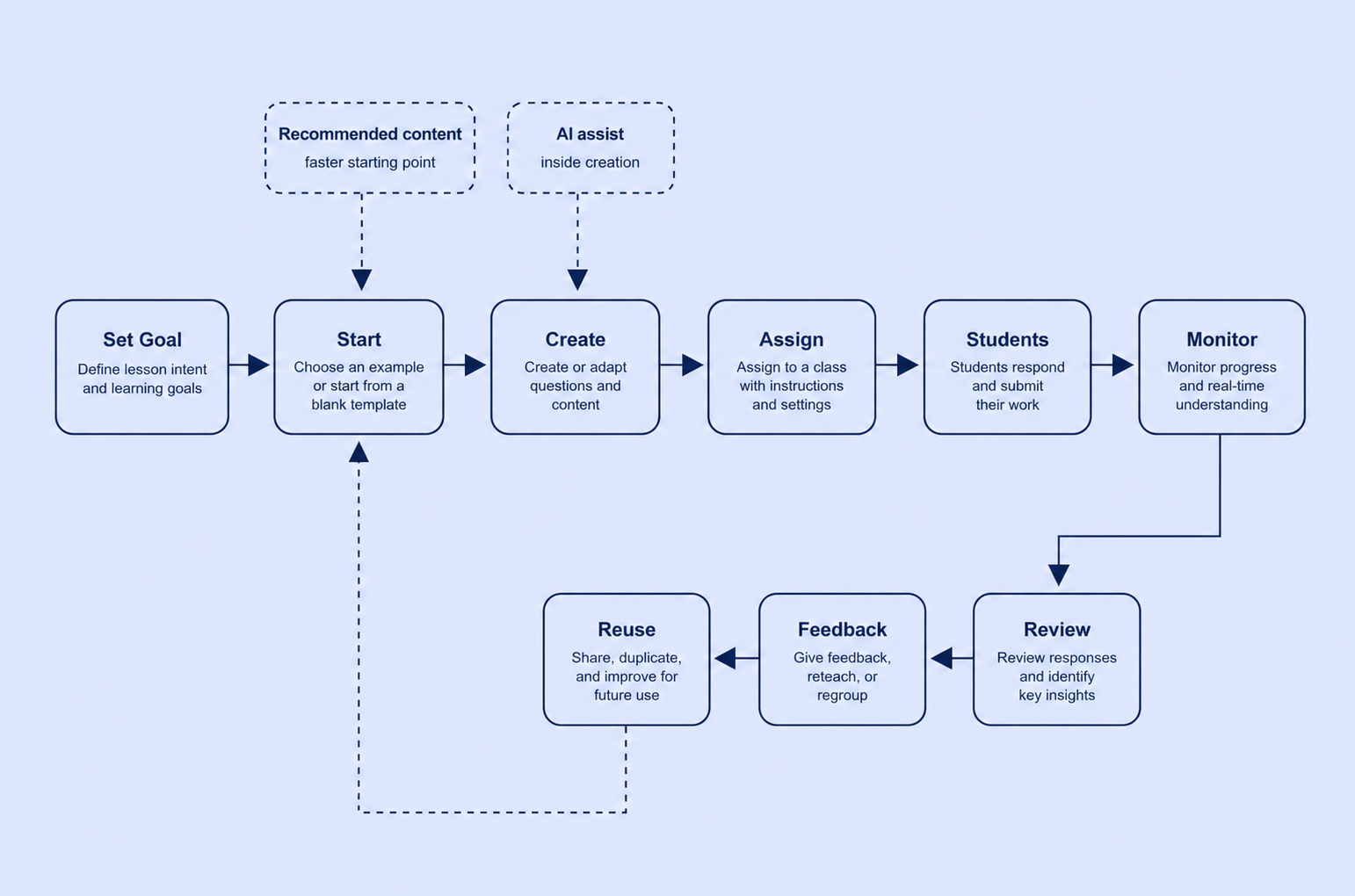
Teachers moved continuously between preparing content, assigning it, observing student understanding, providing feedback, adapting instruction, and reusing successful material.
Formative supported teacher-paced and student-paced delivery, live progress monitoring, question-level and student-level review, and direct feedback. These connected views helped teachers identify where learners were struggling and respond while the work was still relevant.
Each assessment generated evidence that could guide an immediate classroom decision and contribute to longer-term insight.
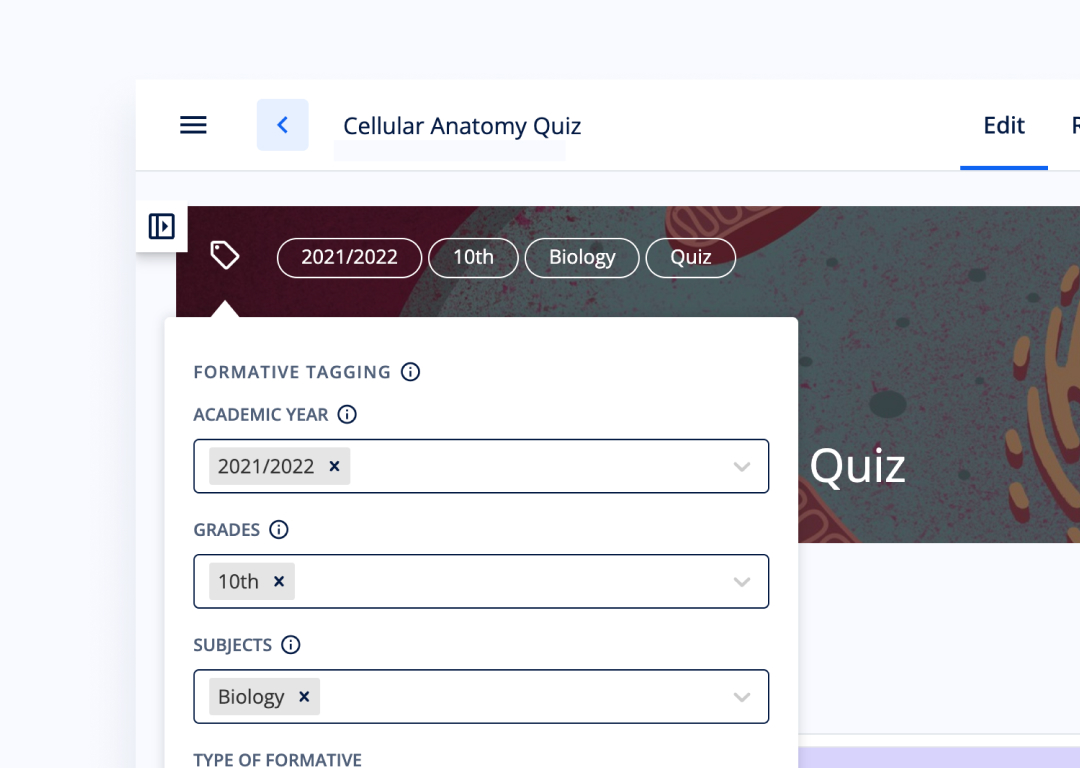
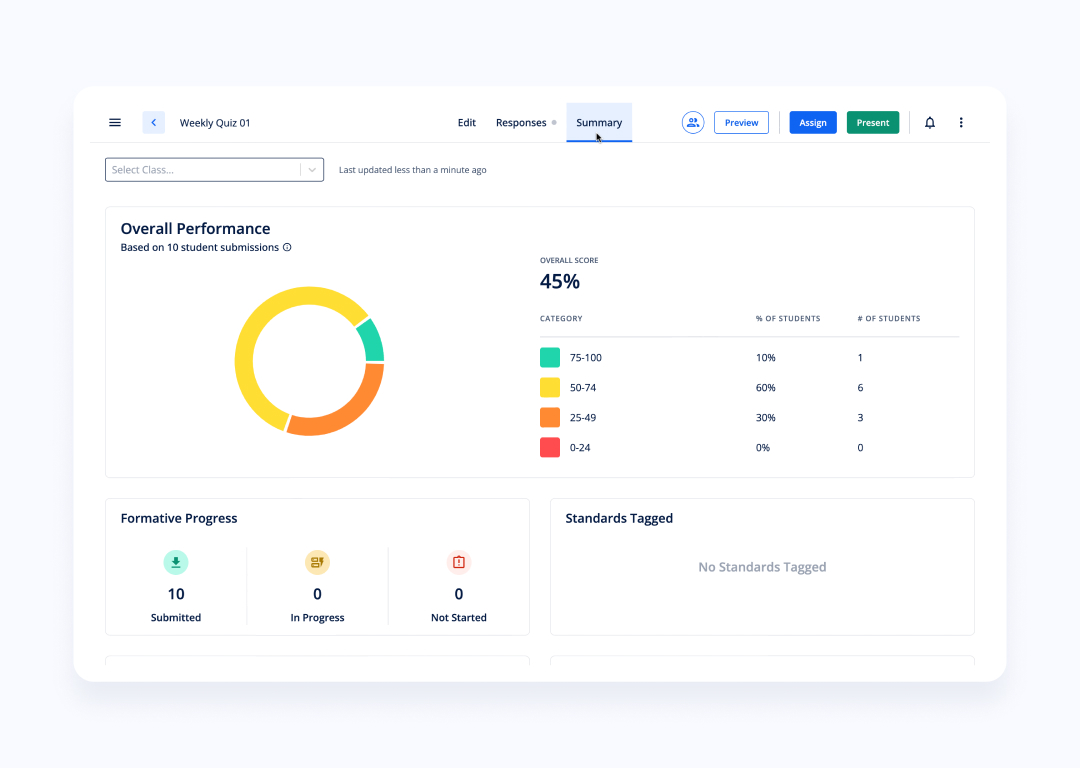
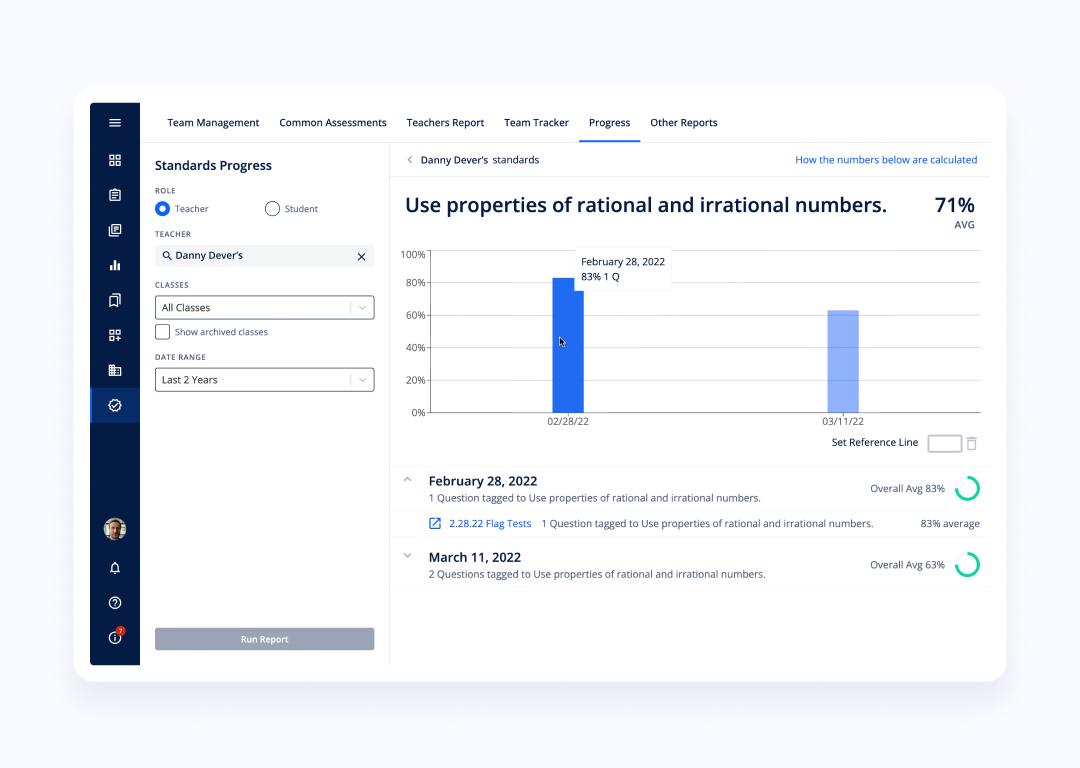
Questions could be aligned with educational standards, allowing individual responses to contribute to a broader view of learning.
Teachers could examine performance by response, question, assessment, student, class, standard, and reporting period. Administrators could look across classrooms, teachers, schools, standards, and time periods to identify patterns and areas requiring support.
The design connected immediate classroom evidence with longer-term measures of progress, giving educators a clearer path from activity data to instructional action.
I grew the design team from one designer to six and directly managed and mentored a multidisciplinary group: three UX designers—including a former teacher, a UX architect, and a product UX manager—a design systems expert, and a junior product designer.
The team combined classroom experience, systems thinking, product leadership, scalable design practices, and developing talent. I established stronger practices around research, critique, prototyping, experimentation, and cross-functional collaboration while continuing to contribute directly to the product.
We strengthened repeatable patterns across navigation, content creation, controls, data views, and feedback states. This improved consistency, reduced reinvention, and gave designers and engineers a shared foundation as the platform expanded.
Newsela acquired Formative in 2023, connecting Newsela’s instructional-content layer with Formative’s assessment, response, feedback, and reporting capabilities. Our work across activation, authoring, classroom insight, standards alignment, design systems, and AI-assisted workflows helped prepare Formative for that broader role.