Turning advanced robot behaviors into everyday controls.
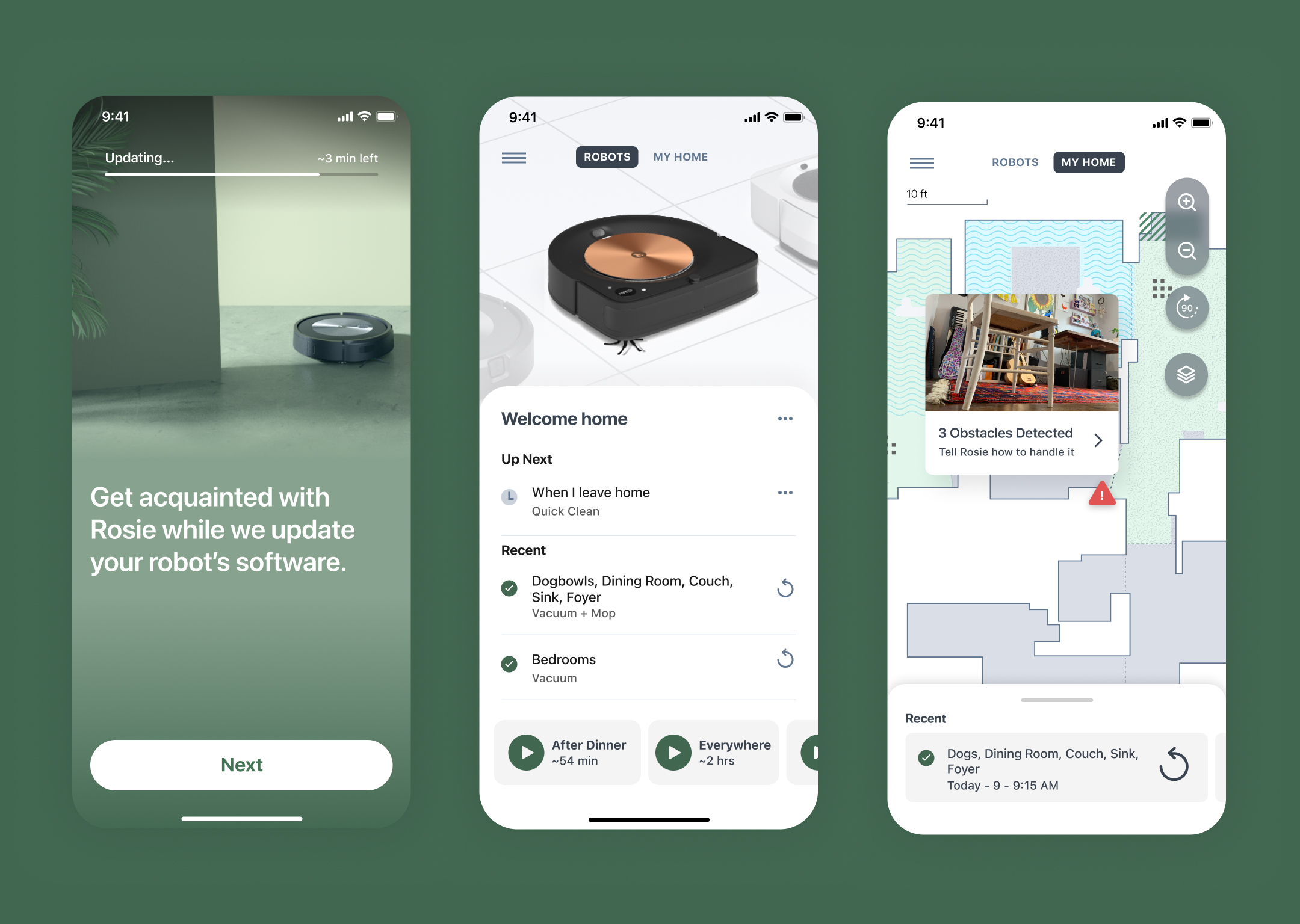
As iRobot’s robots became more intelligent, the customer experience had to catch up. Customers had more advanced capabilities available to them, but there were still gaps in understanding, trust, and control: what did the robot know about the home, why was it behaving a certain way, and how could someone guide it when needed?
New capabilities like mapping, room awareness, object detection, routines, keep-out zones, real-time status, and smart home integrations created a core design challenge: how do you make autonomous behavior feel understandable, trustworthy, and easy to control?
I led product UX for a major evolution of the iRobot mobile app, helping shape experiences across onboarding, map generation, room labeling, targeted cleaning, personalized routines, mission controls, and voice integrations. Working closely with Product, Engineering, Research, and Marketing, I helped translate customer needs and technical capabilities into app experiences that made robot behavior feel clear and useful in everyday life.
A central principle guided the work: autonomy should not remove control. The app needed to act as a bridge between human intent and robot behavior, giving people confidence in what the robot understood, what it was doing, and how they could guide it when needed.
- Room-label accuracy reached 90%
- Full-map creation became 7× faster
- Connected customers grew to 17.6M by the end of 2022 (+26% YoY)
- Revenue from existing customers rose +8.9% (FY2022)
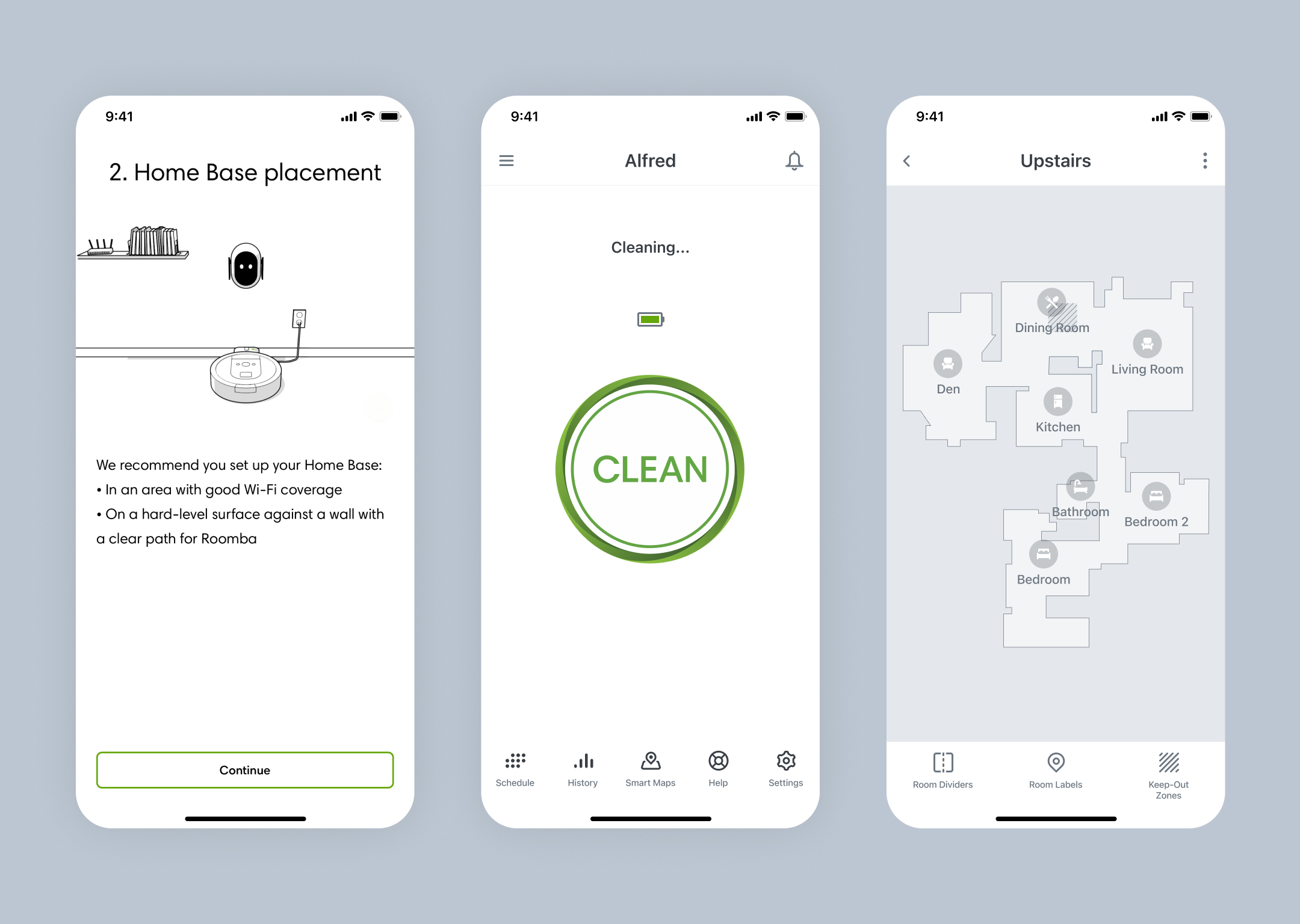
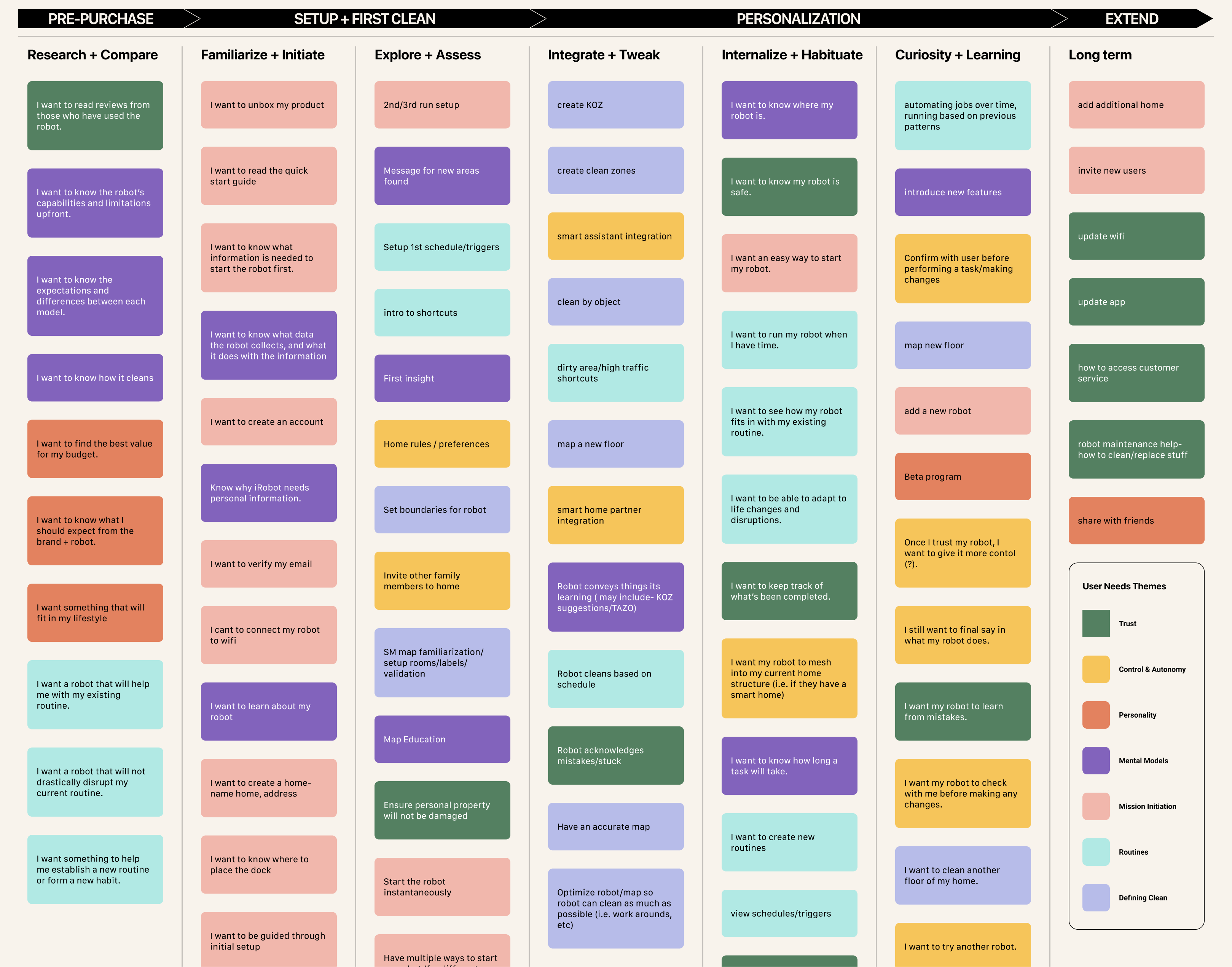
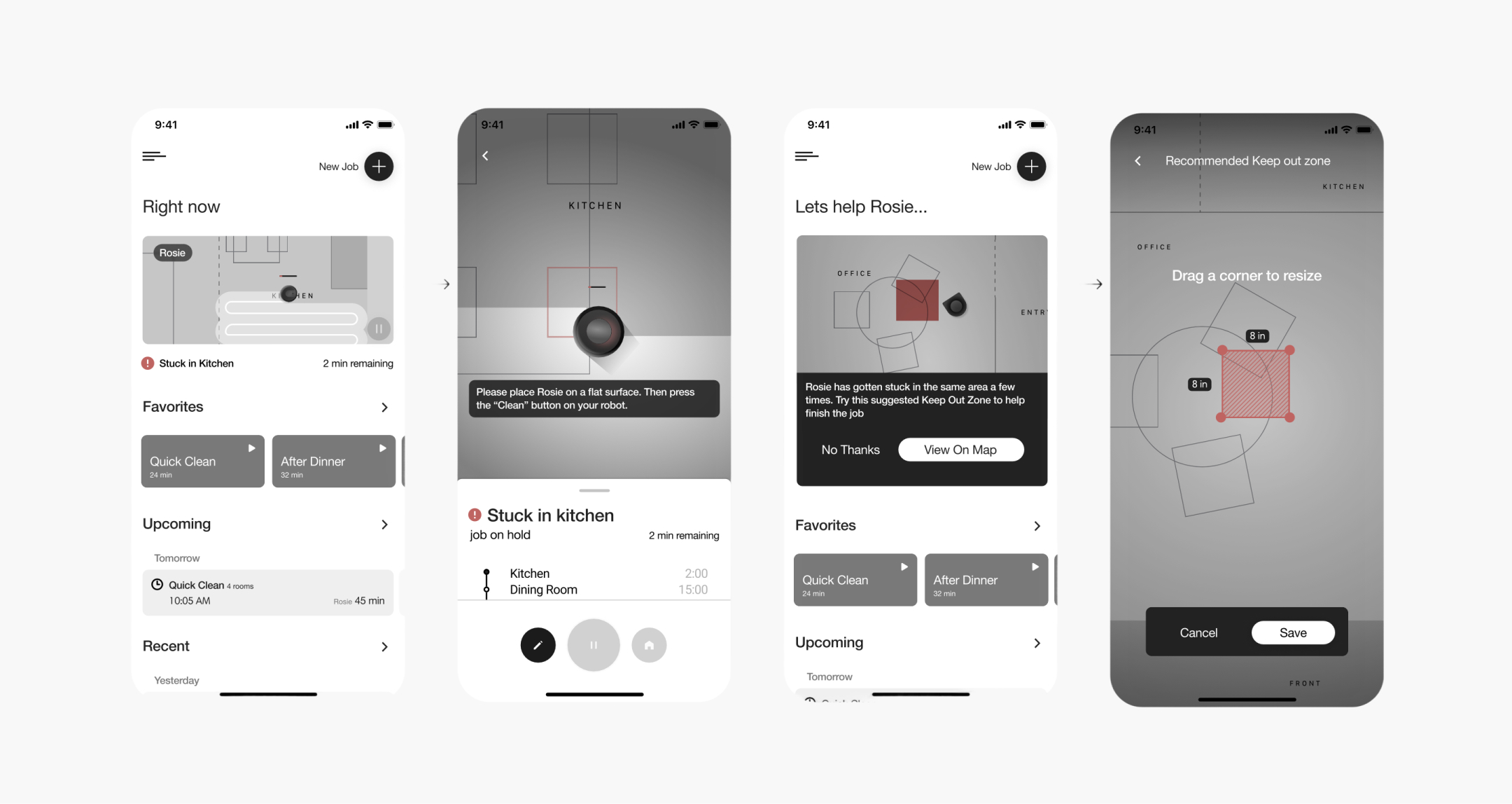
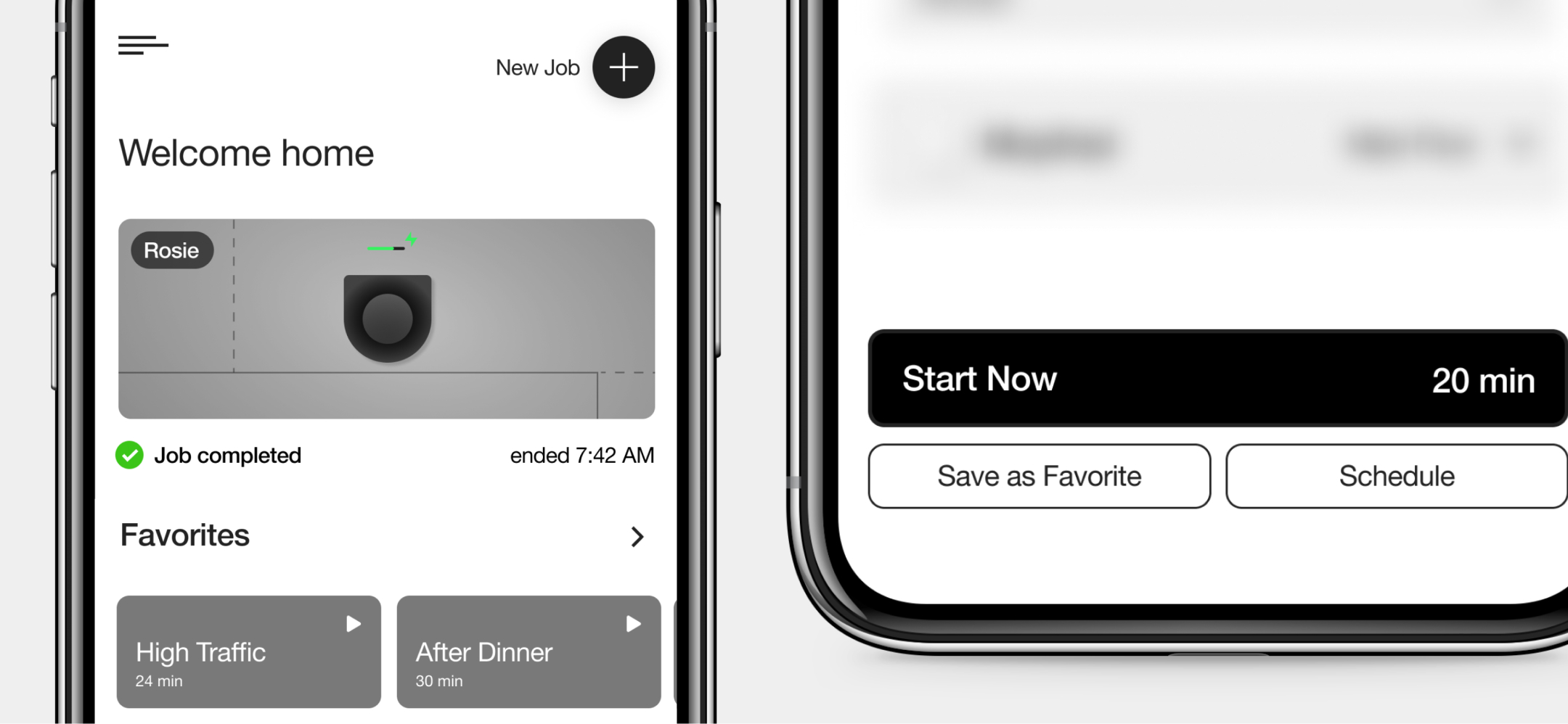
Research helped us understand how customers thought about their homes, cleaning routines, and robot behavior. Across usability studies, concept testing, and mapping exercises, we saw where autonomy created confidence, where it created uncertainty, and what people needed in order to trust the system.
For mapping specifically, participants created paper maps of their own spaces, helping us understand how much detail they needed to recognize rooms, boundaries, and meaningful areas of the home. Those insights shaped decisions across map generation, room labeling, editing tools, personalization, and controls.
The research reinforced a key product truth: every home is different. People wanted to tell the robot what mattered — clean this room, avoid that area, run this routine — without managing a technical floor plan.
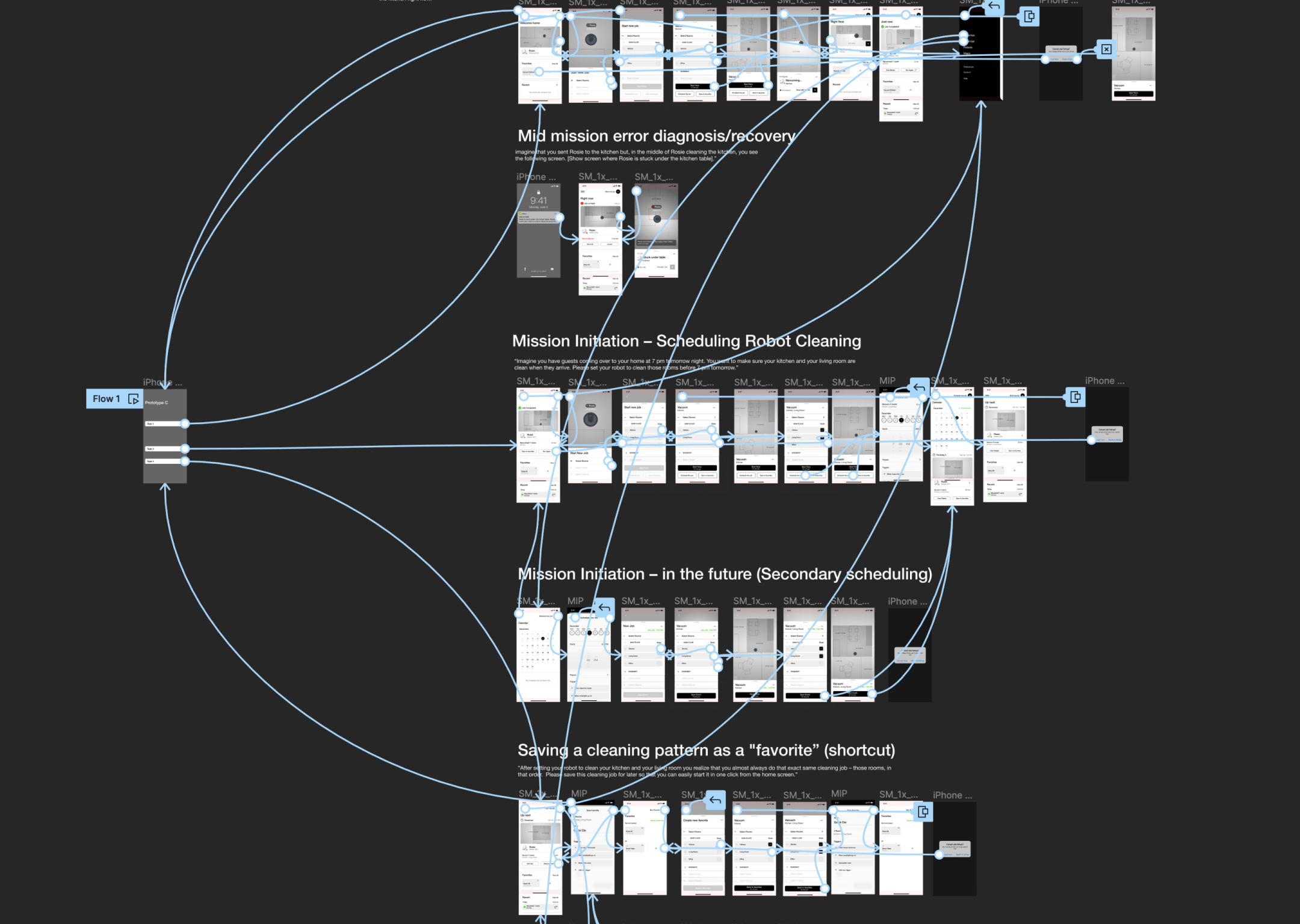
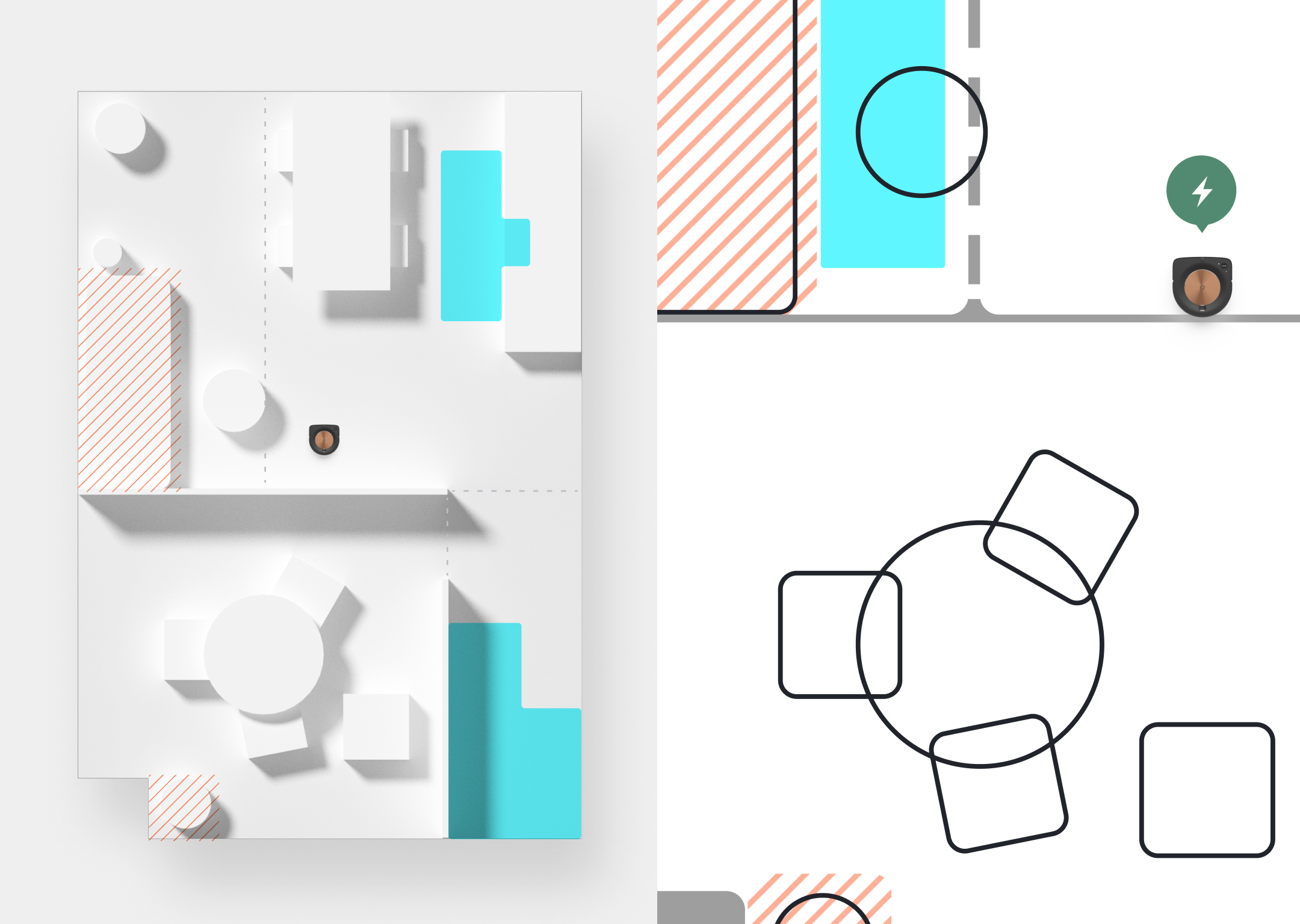
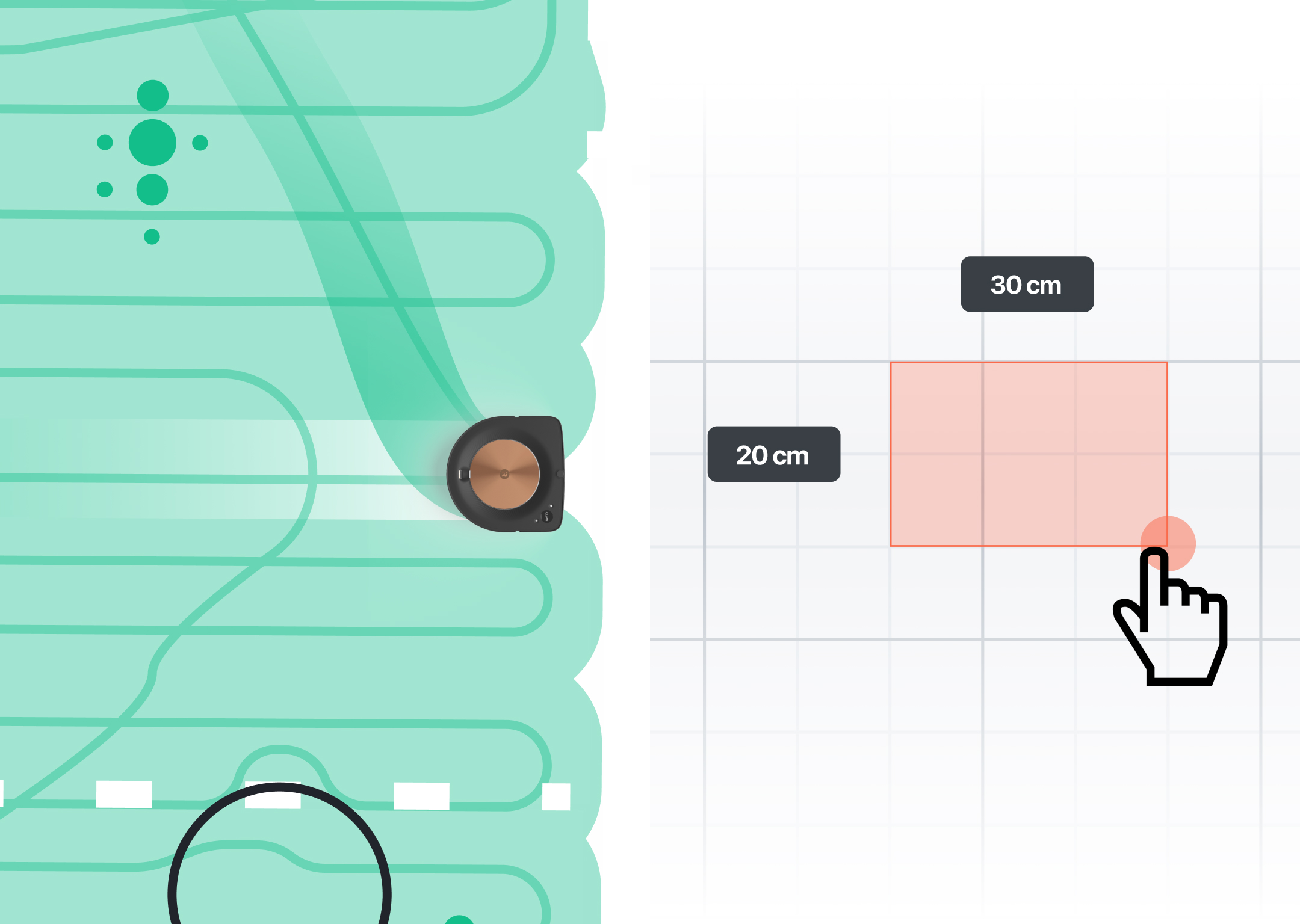
The design process followed a focused sprint rhythm: understand, diverge, decide, prototype, and validate. Each week centered on a specific theme, moving from conceptual design into trust and transparency, control versus autonomy, the robot-human relationship, mental models, starting a job, home-cleaning routines, evidence of clean, and core concepts.
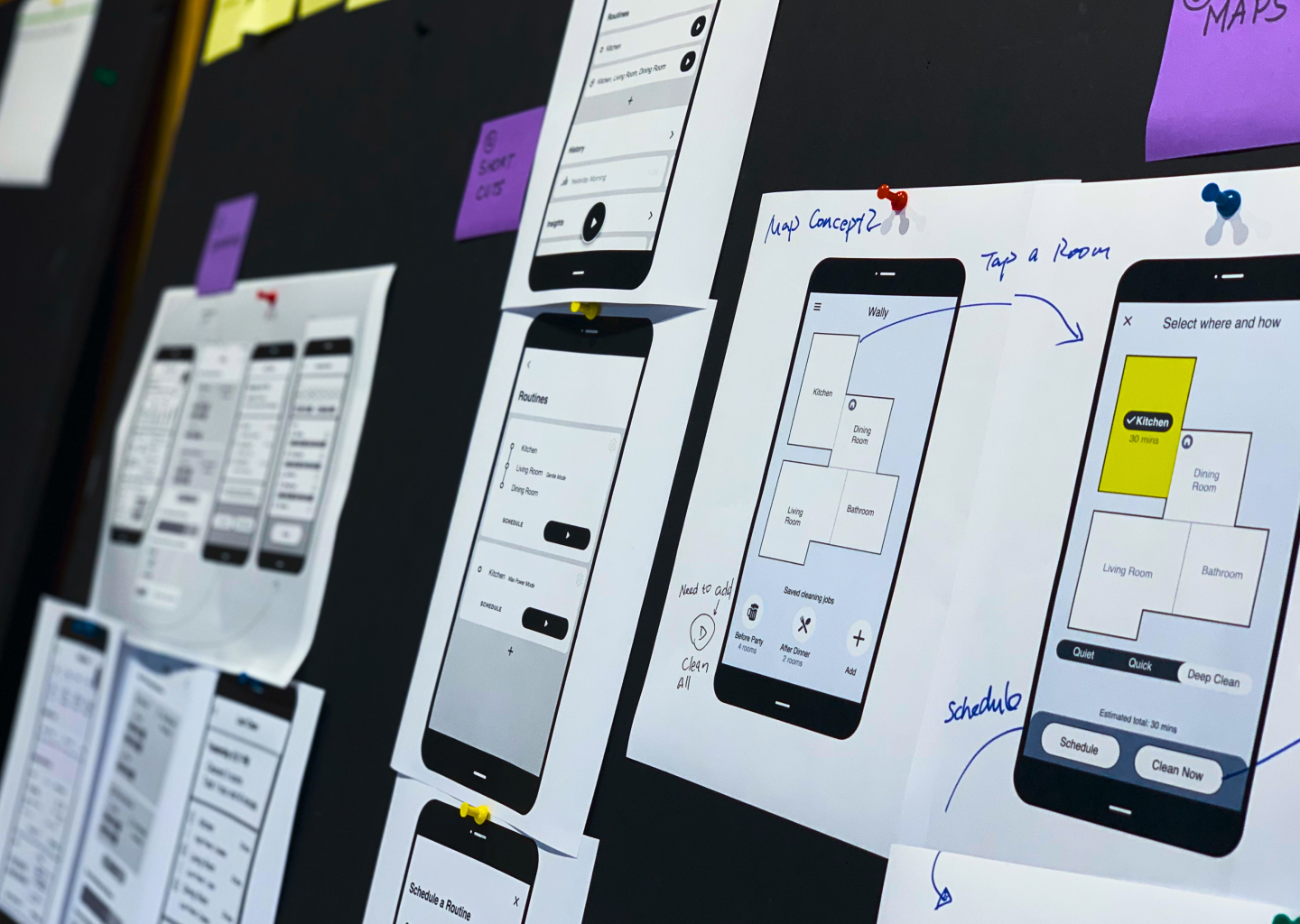
That structure helped the team explore the product as a system rather than a set of isolated screens. We aligned on customer insights, product goals, and technical constraints, then moved quickly into sketches, task flows, journey maps, interface concepts, and prototypes that could be tested and refined.
Rapid prototyping helped us evaluate different ways customers might start a job, interpret a map, create a routine, define a target area, set a keep-out zone, or recover from an issue. User testing helped reveal where autonomy felt helpful, where it felt opaque, and where the interface needed to give people more control.
The process translated broad customer themes — trust, transparency, control, and personalization — into concrete product decisions across mapping, routines, mission controls, and problem recovery.
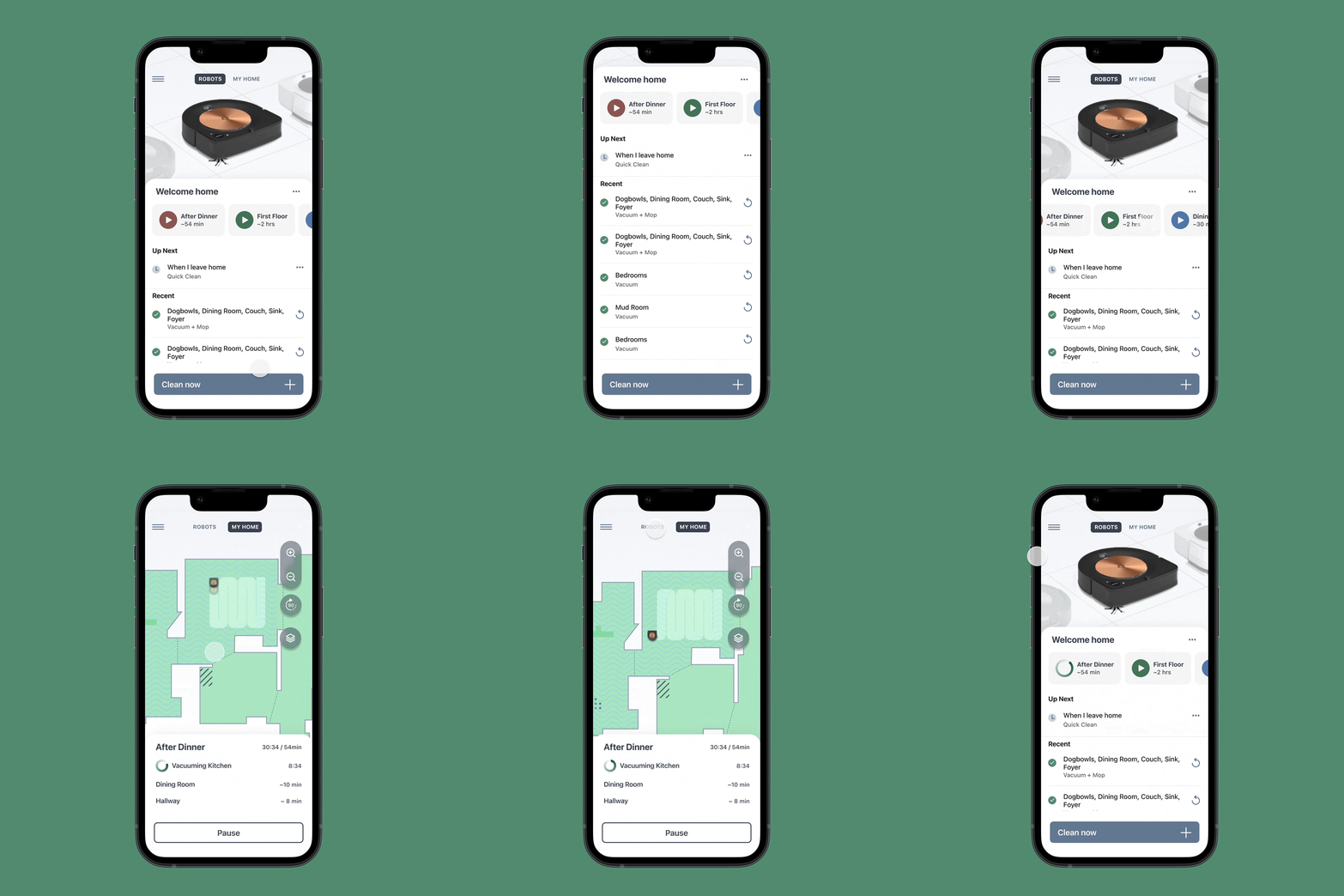
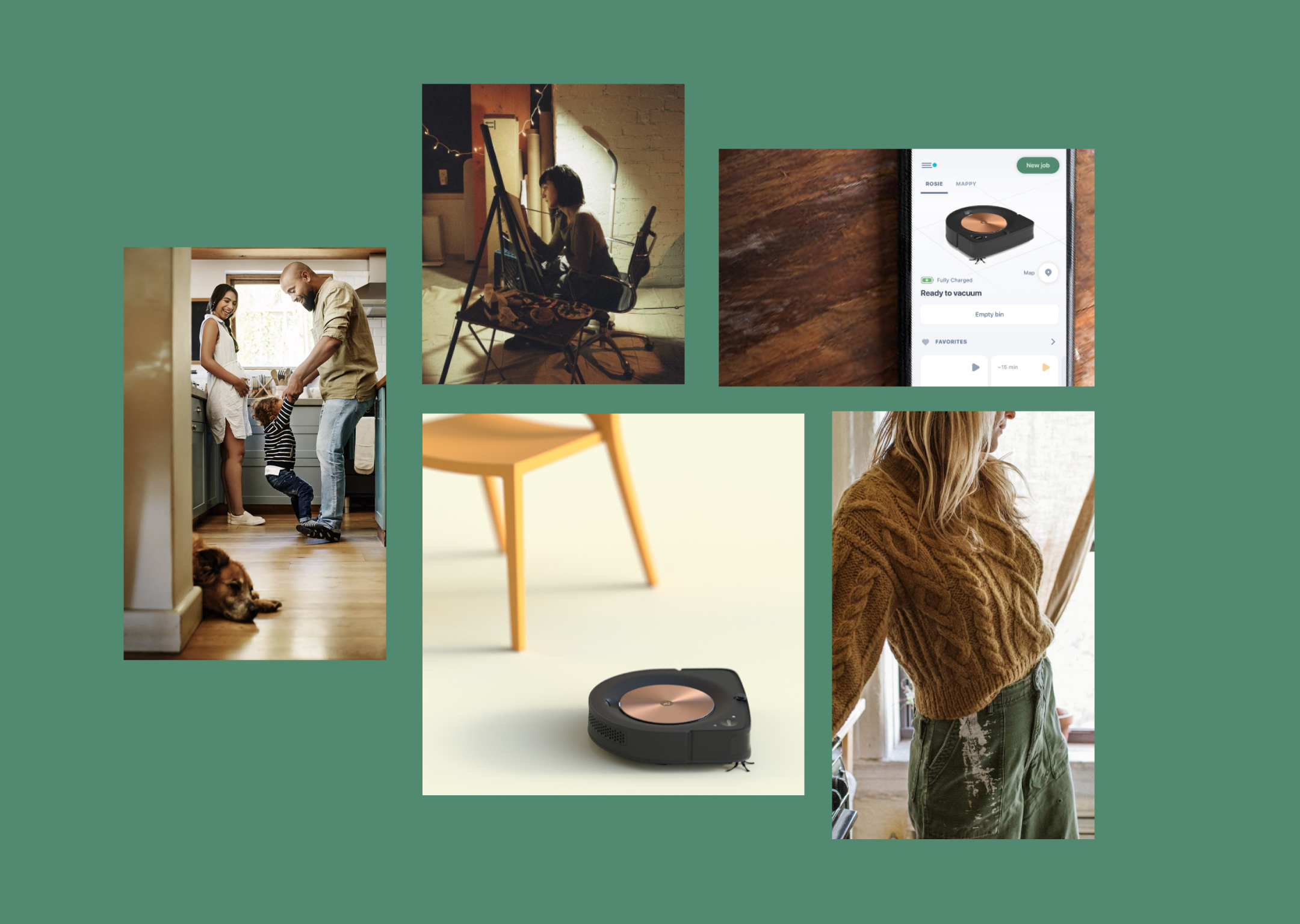
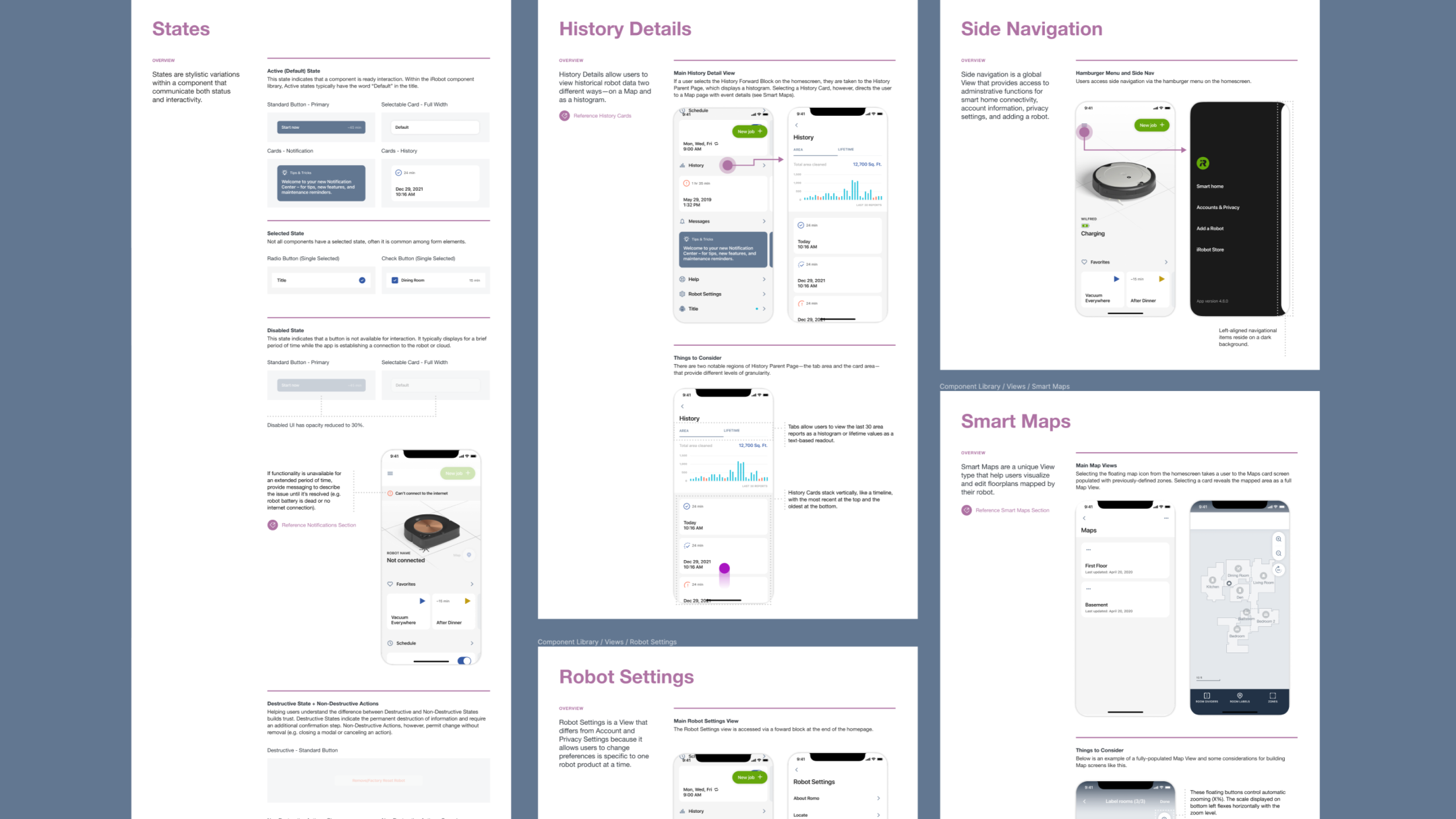
The result was a more understandable and personalized app experience for autonomous cleaning. Customers could shape how the robot worked in their home: which rooms it cleaned, which areas it avoided, when routines ran, and how the system responded to changing needs.
The work helped improve trust by making robot behavior more visible and controllable. Faster map creation helped customers reach value sooner, stronger room-label accuracy made the app feel more reliable, and the broader UX foundation supported a growing ecosystem of autonomous behaviors, routines, and smart home integrations.
For me, the work represented the heart of product design for complex systems: translating advanced technology into everyday experiences that feel clear, useful, and human.