Foundational product design for AI-powered email QA workflows.
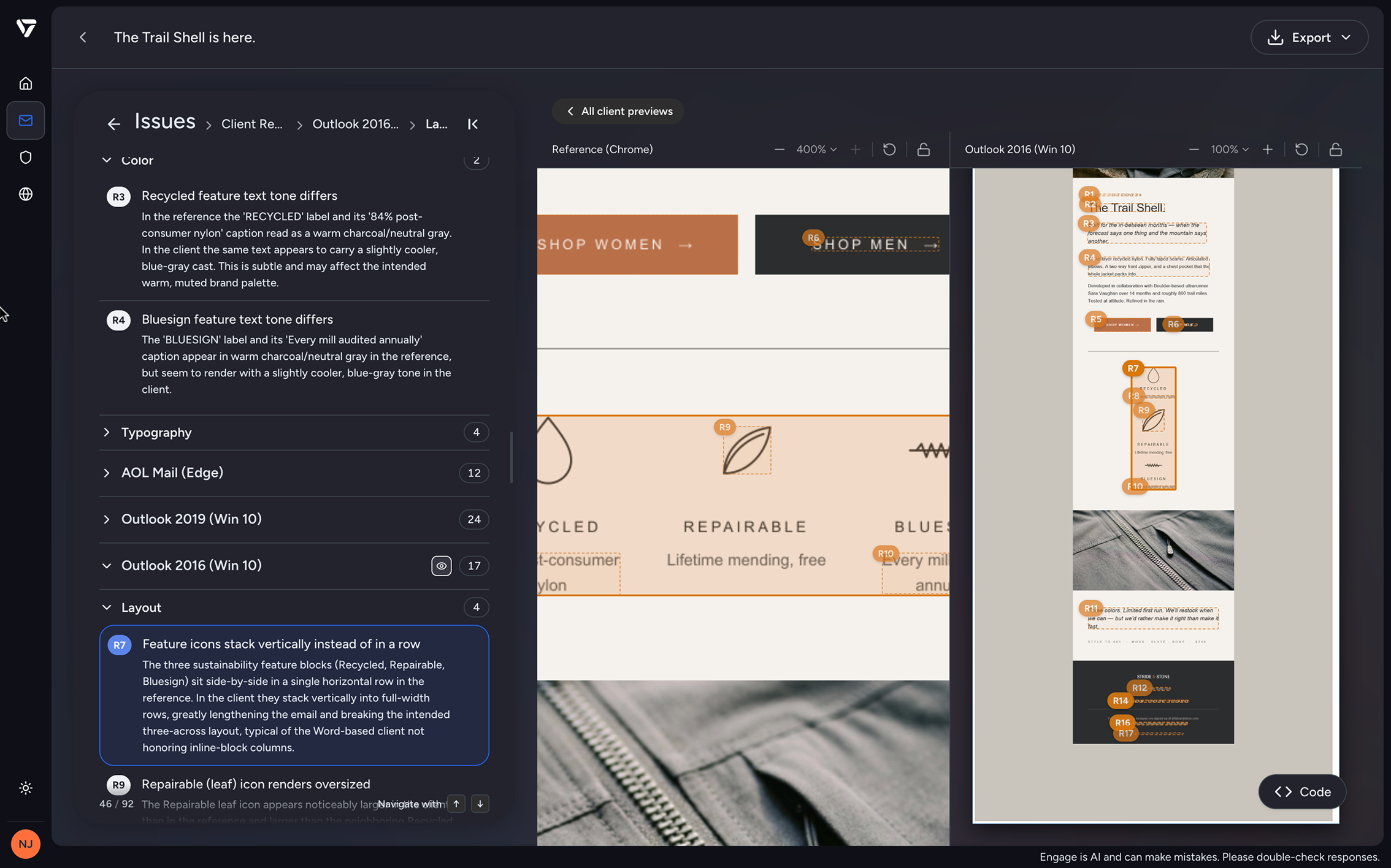
Validity Engage is an AI-powered email platform designed to help enterprise marketing teams identify issues before send and launch campaigns with more confidence.
I was brought in as a design consultant to lead foundational product design for the Email QA experience. The broader challenge was to bring capabilities that had previously lived across separate tools — email rendering, validation, deliverability, compliance, monitoring, and campaign intelligence — into a more cohesive AI-assisted platform.
Email QA is a dense, technical workflow. Users need to understand what is wrong, where it appears, why it matters, what action to take, and whether they can trust the output before changing campaign code or moving toward send.
My role was to help turn that complexity into a clearer product workflow while contributing to a broader modernization of Validity’s product experience and visual language.
The work focused on making Email QA feel less like a collection of reports and more like a connected workflow for understanding, reviewing, and resolving issues.
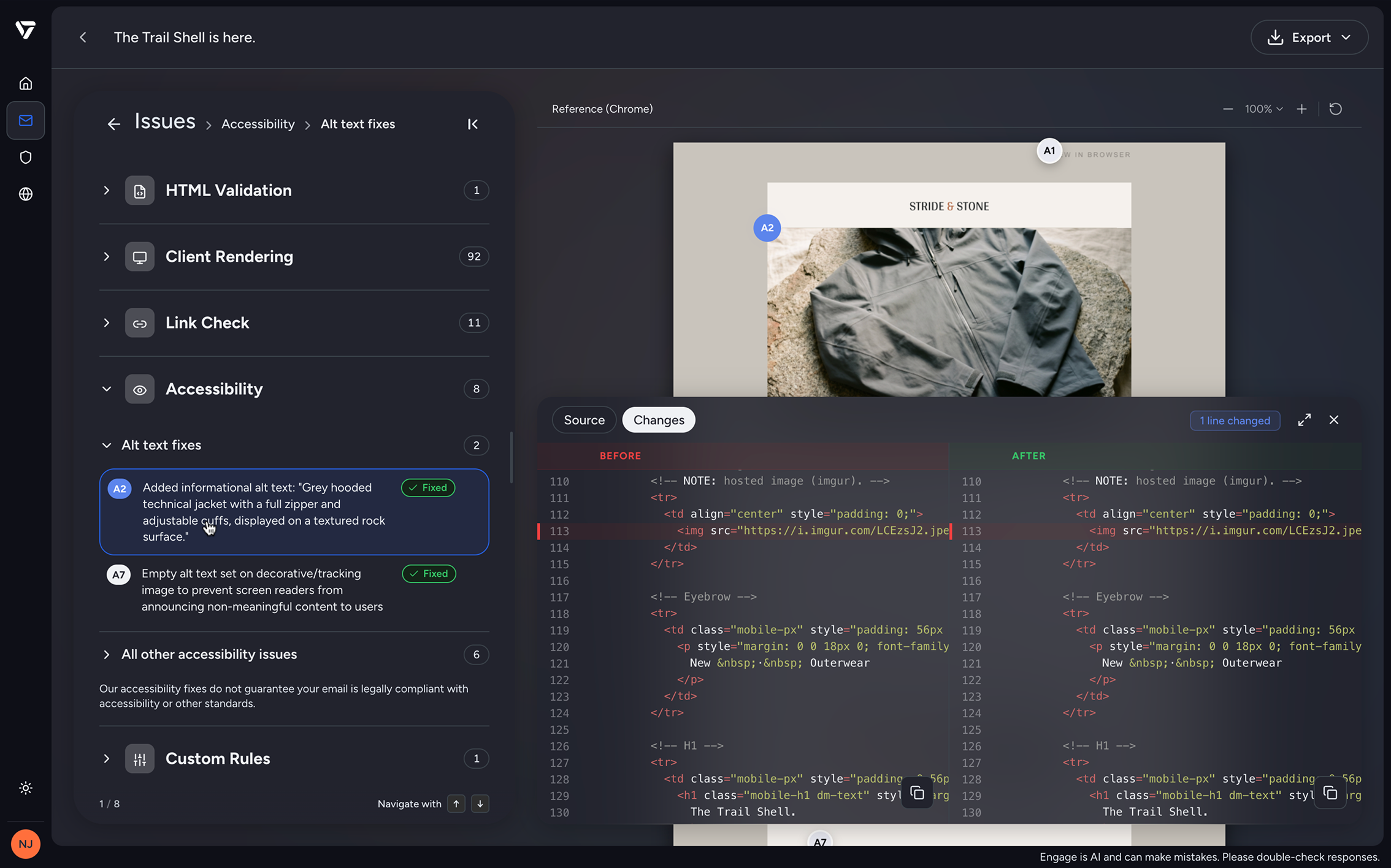
I designed reusable patterns for issue triage, progressive processing states, email previews, supporting evidence, remediation guidance, resolved and archived findings, custom rules, and email readiness.
The interface needed to balance machine intelligence with human judgment. AI could surface issues and recommend actions, but users still needed clear context, control, and confidence before applying changes.
I mapped the end-to-end journey and stress-tested the experience across different issue types, scales, processing states, and levels of technical evidence.
Low-fidelity flows helped align the team around workflow and product logic. Higher-fidelity screens established hierarchy, interaction patterns, and a more cohesive visual system. Prototypes helped evaluate sequencing, inspector behavior, issue navigation, processing feedback, and remediation flows.
Working closely with product, engineering, research, data, and brand partners, I helped connect individual design decisions to a system that could extend beyond Email QA into the broader Engage platform.
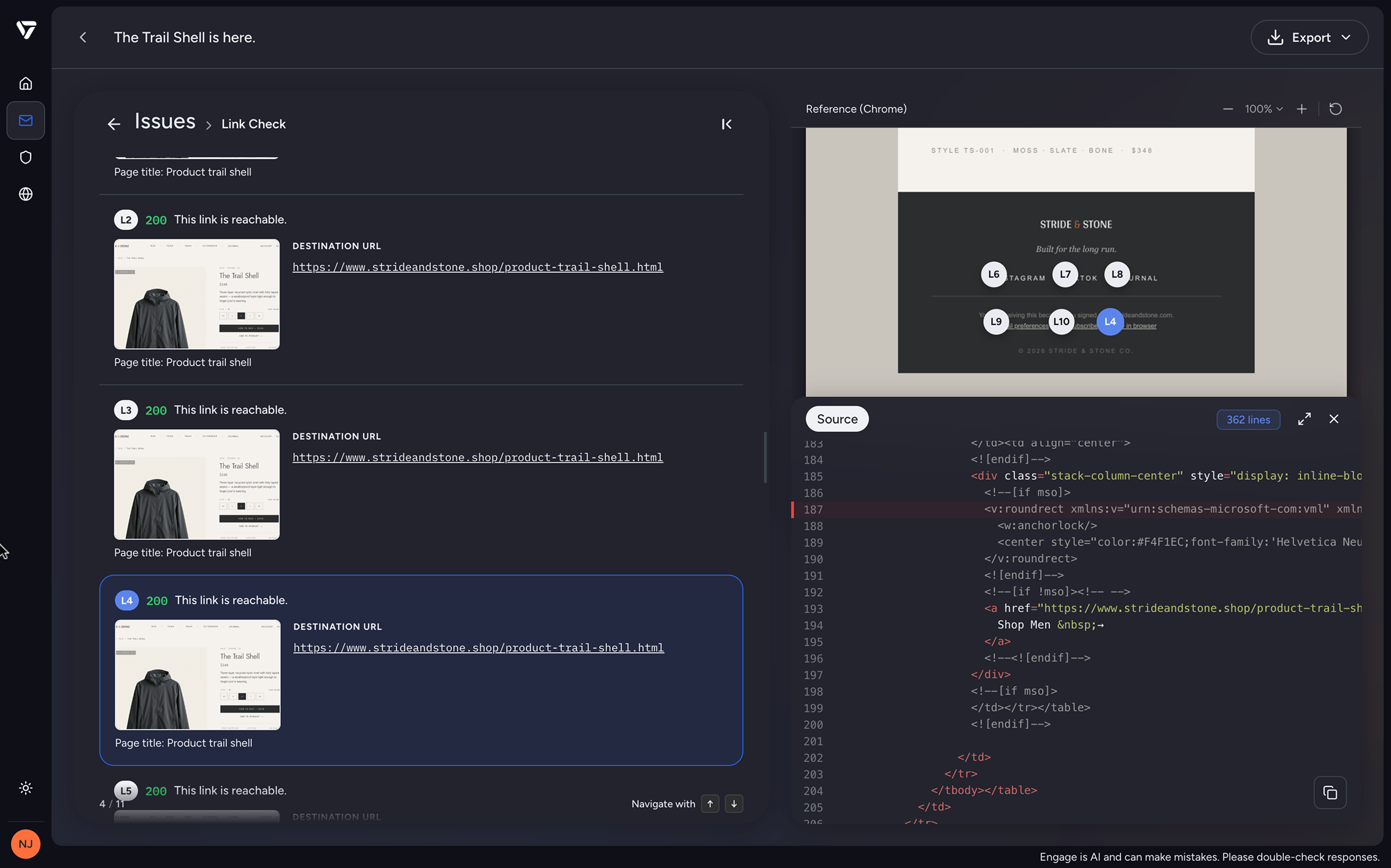
The work helped shift the product from isolated QA screens toward a scalable system for AI-assisted issue detection, evidence, remediation, custom standards, and email readiness.
For users, the experience created a clearer connection between an identified issue, its location in the rendered email, the supporting technical context, and the action available to resolve it.
For the product, the work established reusable interaction and visual patterns that could support a broader platform of intelligent email workflows.
This public case study intentionally provides a limited view of the work.