AI should help industries innovate faster.

It should help teams explore more ideas, understand people more deeply, test assumptions earlier, build things that were previously too expensive or too slow to pursue, and uncover new markets, business models, and opportunities for growth.

That is the promise, and I believe in it.

I use AI tools every day as a serious part of how I work. I prototype faster than I used to, iterate in ways that were not practical before, and use AI to shape systems, challenge assumptions, and refine work more quickly.

But as AI becomes embedded in how we think, make, discover, and decide, organizations will need better ways to preserve human collaboration and shared understanding.

Here is the pattern, and it is not specific to any one field: AI lowers the cost of producing convincing artifacts. Prototypes, analyses, drafts, models, recommendations — work that once took weeks can now appear in hours, already shaped and opinionated. A team can rally around something that looks like an answer before it has built a shared understanding of the question.

The risk is not that AI helps us move faster. The risk is that we start confusing individual output with collective understanding.

At a practical level, this is about making better decisions. At a deeper level, it is about preserving what makes the work human: context, responsibility, care, and the ability to understand how we arrived at a solution and why it matters.

Real innovation depends on how quickly teams can learn together, not only on how quickly they can produce.

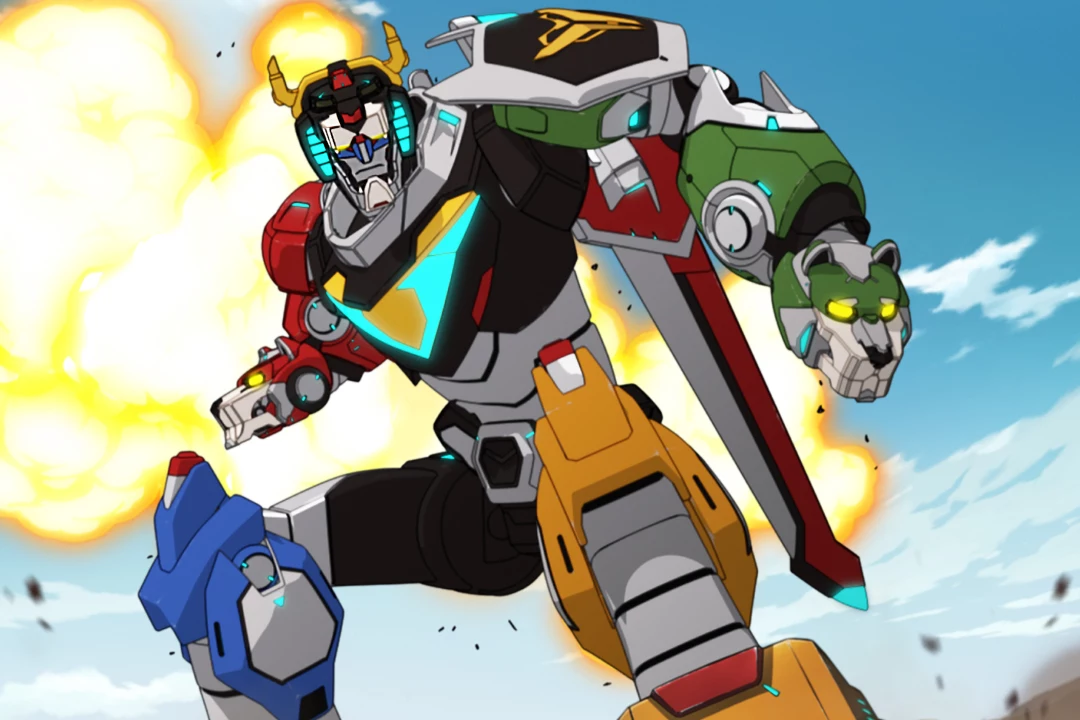
That is why I keep coming back to what I think of as the Voltron model.

Voltron was a giant robot formed by a group of smaller machines, each with its own human pilot. Each part had a job. Each person had a role. The strength came from combining those roles into something more powerful than any one part could be alone.

But Voltron wouldn’t be Voltron if everyone was the same part.

Every field has its own pilots: the clinician and the biostatistician, the analyst and the operator, the researcher, the strategist, and the builder. Healthy teams in any domain work the same way: distinct expertise, deliberately combined. The roles overlap, and they should. No single discipline owns all the good ideas. But overlap is different from flattening.

AI is most valuable when it strengthens this model rather than dissolving it — when it helps each discipline bring more of its own expertise to the table, not when it blurs every role into one general output machine.

I have watched this play out firsthand in product design, the domain I know best.

Generative tools are lowering the cost of producing high-fidelity concepts. A polished prototype can create the appearance of alignment before a team has developed a shared understanding of the customer need, business goal, or technical constraint behind it. The screen arrives already opinionated, and the conversation shifts from “what problem are we solving?” to “can we build this?” That is not collaboration. That is reaction.

In complex product work, the interface is only the visible layer of a much larger system. The real challenge is helping someone understand what matters, why it matters, and what to do next — and that requires customer context, business judgment, technical understanding, and systems thinking that no single person holds alone.

I saw this clearly during my time at iRobot. The best work did not come from any one discipline seeing the whole picture. Researchers helped us understand how people thought about cleaning, control, privacy, maps, routines, and trust inside their homes. Product connected those needs to business priorities and the shape of the roadmap. Engineering helped us understand what the robot, cloud, app, and computer vision systems could support. Design brought those inputs together into flows, interactions, and moments that made the product feel understandable and trustworthy.

The strongest work happened before the screens were polished, when those perspectives were still in conversation with each other. That collaboration was not a step before the “real” work. It was how the product got better.

What is true in product design is true wherever AI accelerates the work: the faster teams can produce something that looks like an answer, the more the disciplines around collaboration matter. Critique, working sessions, shared principles, and cross-functional review help keep individual acceleration connected to collective understanding. The rituals are not overhead. They are the mechanism.

And there is an opportunity here that goes beyond protecting what we already do.

The next layer of AI tooling should not only help teams generate work. It should help teams preserve the reasoning behind the work.

Imagine opening a decision — a feature, a treatment protocol, a trading model, a design pattern — and seeing what shaped it: the evidence it rests on, the assumptions it makes, the tradeoffs the team weighed, and the questions still open. Today that reasoning lives in scattered documents and people’s memories. It evaporates as teams change. AI is well suited to capturing it, connecting it, and keeping it alive.

In that version of the future, AI does not just accelerate output. It helps teams remember why decisions were made, where uncertainty remains, and what still needs to be learned.

That is the opportunity: a culture of “look what we learned,” supported by tools built for learning together.

Different pilots. Different strengths. One shared machine.

That is the Voltron model.